We will accompany you to Tribhuvan International Airport for your final departure. Though the journey in Nepal ends today, the spirit of the Himalaya travels with you. We hope these mountains will call you back again for new adventures.
The trek to the foot of Sagarmatha, Mount Everest, is a journey into the heart of the high Himalaya. Over 15 days, this classic route leads from the forested lower valleys along the Dudh Koshi river to the glaciated heights above the treeline. Along the way, rhododendron forests, high suspension bridges, and small Sherpa villages introduce the rhythm of mountain life, while each ascent brings increasingly dramatic views of the surrounding peaks. As the trail rises, forests give way to alpine meadows, yak pastures, and stone-walled fields beneath towering giants like Ama Dablam, Lhotse, and Nuptse. Sherpa culture is woven into every step: carved mani stones line the paths, prayer wheels spin in streams, and monasteries like Tengboche offer serene havens amidst this majestic landscape.
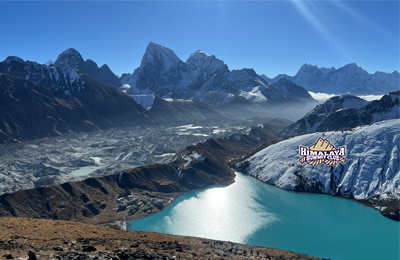
Above the treeline, the moraine of the Khumbu Glacier leads to Everest Base Camp (5,364m / 17,598ft), a place steeped in mountaineering history. The final ascent to Kala Patthar (5,545m / 18,192ft) rewards trekkers with an iconic, unobstructed view of Everest and its neighboring peaks. Achievable by any fit walker, the itinerary carefully balances daily climbs with acclimatization to ensure safe progression to higher altitudes. The trek is best undertaken during the clear, stable months of spring (March–May) or autumn (September–November), when trails are in optimal condition and the mountain vistas are at their sharpest. This journey is as much a cultural immersion as a physical challenge, offering an unforgettable experience of Himalayan landscapes, Sherpa life, and the grandeur of the world’s highest peaks.
Upon your arrival at Tribhuvan International Airport, our representative will be there to greet you for your transfer to the hotel. It is a day to settle in and shake off any jet lag. In the evening, we will host a welcome dinner and provide a comprehensive briefing about the journey ahead, a chance to meet your guide and ensure all your gear is in order.
(Drive: 132km, 4-5 hours | Flight: 15-20 minutes | Trek: 8km, 3-4 hours | Elevation Loss: 240m / 787ft)
Today’s journey to the trailhead at Lukla (2,850m / 9,350ft) depends on the trekking season. During the peak seasons of spring and autumn, flight operations are shifted to Ramechhap to avoid congestion at Kathmandu airport. This requires a 4 to 5-hour pre-dawn drive from Kathmandu, followed by a short, exciting 15-minute flight to Lukla. In other seasons, the flight is a more direct 30-minute journey from Kathmandu itself. Once on the ground in Lukla and after a short break, the trek begins with a gentle walk of about 3 to 4 hours to Phakding (2,610m / 8,563ft), a pleasant descent that allows your body to begin adjusting to the mountain air.
(Trek: 11km, 5-6 hours | Elevation Gain: 830m / 2,723ft)
The day’s walk to Namche Bazaar (3,440m / 11,286ft) takes a solid 5 to 6 hours and is the first real test of the trek. The trail follows the Dudh Koshi river, crossing it several times on high, prayer-flag-draped suspension bridges. After entering the official gates of Sagarmatha National Park at Monjo, the path drops to cross the spectacular Hillary Bridge before beginning the long, sustained ascent to Namche. Our guides will pace this climb carefully, reminding you to walk bistari, bistari (slowly, slowly). The first glimpse of Everest through the trees on the way up is a profound reward for your effort.
(Hike: 3-4 hours | Highest Point: 3,880m / 12,730ft)
This is not a rest day, but an essential day for adapting to the altitude. We follow the principle of ‘climb high, sleep low’. After breakfast, we will guide you on a beautiful day hike up to the Everest View Hotel. The panorama from here is your first grand reward: a stunning vista of Everest, Lhotse, Nuptse, and the magnificent Ama Dablam. The afternoon is yours to explore Namche’s unique market, its surprisingly good bakeries, or simply sit with a pot of tea and watch the world go by.
(Trek: 10km, 5-6 hours | Elevation Gain: 420m / 1,378ft)
The trail out of Namche contours high above the valley with stupendous views before making a steep drop to the river at Phunki Tenga, a descent that feels like you’re giving back all the height you worked so hard for. After lunch beside the river, a tough, two-hour climb through a forest of pine and rhododendron awaits. Just when you think the climb will never end, you emerge onto the ridgetop to find the iconic Tengboche Monastery (3,860m / 12,664ft), a spiritual haven set against one of the finest backdrops in the Himalaya. Attending the evening prayer ceremony with the monks is a truly special experience.
(Trek: 9km, 5-6 hours | Elevation Gain: 550m / 1,804ft)
Today you truly leave the treeline behind. The trail descends through a beautiful forest of birch and rhododendron to cross the Imja Khola and then climbs steadily, passing through Pangboche, the highest year-round village in the valley. The landscape becomes more alpine as you move into a valley of low scrub and stone-walled fields. Ama Dablam towers over you, seeming so close you could almost touch it. The walk to Dingboche (4,410m / 14,468ft) takes about 5 to 6 hours, and you will feel the thinness of the air.
(Hike: 4-5 hours | Highest Point: 5,083m / 16,676ft)
Another vital day for adapting safely before pushing higher. The recommended activity is a rewarding hike up the ridge behind Dingboche towards Nangkartshang Peak. You don’t need to reach the summit; every meter gained opens up breathtaking new views, including the first sight of Makalu. This effort makes a significant difference to how your body will cope with the altitudes of Lobuche and Gorak Shep.
(Trek: 7km, 5-6 hours | Elevation Gain: 530m / 1,739ft)
Today’s 5 to 6-hour trek is a steady, gentle climb up the valley floor to Thuklha. From here, the path ascends steeply to the Thuklha Pass, a somber but beautiful ridge dotted with stone cairns and memorials for climbers lost on Everest. It’s a poignant and humbling place. The trail then flattens out, following the lateral moraine of the Khumbu Glacier to the small, high-altitude settlement of Lobuche (4,940m / 16,207ft), where the nights are properly cold.
(Trek: 13km, 7-8 hours | Highest Point: 5,364m / 17,598ft)
This is the day you have been working towards. The trail to Gorak Shep (5,164m / 16,942ft) is an otherworldly 3-hour walk along and over the glacier’s moraine. After a quick lunch and settling into what is the highest overnight stop of the trek, we make the round trip to Everest Base Camp. The route is rough, but the destination is legendary. You stand among the colorful expedition tents at the foot of the treacherous Khumbu Icefall. You can’t see the summit from here, but you can feel its immense, powerful presence.
(Trek: 16km, 7-8 hours | Highest Point: 5,545m / 18,192ft | Elevation Loss: 1,275m / 4,183ft)
An early start in the pre-dawn cold is required for the 2-hour ascent of Kala Patthar. This is the trek’s true visual climax. From this small, rocky peak, you will witness the most iconic sunrise view of Mount Everest’s summit pyramid. After descending for a well-earned breakfast, we begin the long walk back down to Pheriche (4,270m / 14,009ft), a journey that feels remarkably easier with every lungful of thicker, warmer air.
(Trek: 19km, 6-7 hours | Elevation Loss: 830m / 2,723ft)
A long but satisfying day of descent awaits, covering about 19 km in 6 to 7 hours. With gravity now firmly on your side, the walk feels like a victory lap. You retrace your steps through Pangboche and the beautiful forests below Tengboche. The day ends back in the vibrant hub of Namche Bazaar, where a hot shower and a celebratory meal at one of the many restaurants are well-deserved.
(Trek: 19km, 6-7 hours | Elevation Loss: 600m / 1,968ft)
The final day on the trail. It’s a long walk of 6 to 7 hours, but mostly downhill. You descend the Namche Hill for the last time, exit the national park, and follow the familiar path along the Dudh Koshi back to Lukla. This evening is a time for celebration with your entire crew, a chance to thank the guides and porters who made your journey safe and successful.
(Flight: 15-30 minutes | Drive: 132km, 4-5 hours)
An early morning flight is taken from Lukla, schedule permitting. During the peak season, this will likely be a flight to Ramechhap, where our vehicle will be waiting for the four to five-hour drive back to Kathmandu. On occasion, flights may operate directly to Kathmandu. Upon arrival, you will be transferred to your hotel for a well-earned rest and a hot shower.
This day is a necessary buffer for potential flight delays from Lukla. Delays are a common occurrence, and a contingency day is a sensible precaution. If you arrive back on schedule, the day is free for independent sightseeing or shopping. We will host a farewell dinner in the evening to celebrate your incredible journey.
We will accompany you to Tribhuvan International Airport for your final departure. Though the journey in Nepal ends today, the spirit of the Himalaya travels with you. We hope these mountains will call you back again for new adventures.
| Start:Tuesday August 18, 2026 |
End:Monday August 31, 2026 |
Price: Contact Us |
Status: Available |
|
| Start:Thursday August 13, 2026 |
End:Wednesday August 26, 2026 |
Price: Contact Us |
Status: Guaranteed |
For the Everest Base Camp trek, there will be one UIAA Certified Trek leader, assistant Trek leader (5 trekkers:1 assistant guide) and Sherpa porters for luggage carrying (2 trekkers:1 porter) This arrangement ensures that should anybody in the group is sick, the trip can still go ahead as planned. We can run the trek for groups of any size, but usually, it is a maximum of twelve people as we’ve found this to be the optimum size for a successful trip. However, if you’d like to book this trip for a large group then that can be arranged too.
We will be staying at Hotel Marshyandi/Moon light Hotel/Yatri Suites Spa Hotel in Kathmandu, and teahouses during the trek. All accommodations are on twin-shared basis. Single supplement will be served on request and will cost an additional USD. Himalaya Summit Club will arrange rooms with attached washrooms; however, teahouses in some places only have shared washing and toilet facilities. Also note that single rooms are readily available in Kathmandu and the trekking regions at lower elevation but it might be difficult to find them at higher elevations.
During our trek, we can enjoy authentic Nepalese food as well the more common international cuisine (Tibetan, Continental, Italian, Indian, etc.). Breakfast and dinner will be served from the teahouse or from a lodge menu where we spend the night whereas lunch will be served on the way to the next destination. All meals will be provided during trekking while only breakfast will be available in Kathmandu. There will also be welcome and farewell dinners for guests.
It is a condition upon joining any of Himalaya Summit Club trips that all clients be insured for comprehensive expenses that might incur due to medical issues or accidents (this includes air ambulance, helicopter rescue, and treatment costs). Please note that we don’t arrange or sell insurance.
This trek’s itinerary is planned with a high degree of awareness of AMS (Acute Mountain Sickness). Going up at higher altitudes too fast causes a medical condition serious enough to result in death. The higher the altitude, the less oxygen will be in the air. For example, at an altitude above of 5000m, there is 50% less oxygen than at sea level. Therefore, our body needs many days to adapt to an environment with less-oxygen. During this trip, a separate day is set aside in Namche & Dingboche for acclimatization.
Himalaya Summit Club advises guest(s) with known heart, lungs or blood diseases to consult their doctor before traveling. Mild headaches, fever, loss of appetite or stomach disorders are symptoms of AMS. Check out “Altitude illness” by Dr Jim Duff, whether once you getting in Kathmandu you can we will arrange to meet with Expedition Doctor Mr. Nima Namgel Sherpa. Himalaya Summit Club itineraries are designed to try to prevent AMS as much as possible. But, it is important to remember that some visitors are more vulnerable than others.
This is a moderate trek suitable for passionate walkers who have the ability to walk at least 5-7 hours a day with a light day pack. Walking in higher altitudes is more physically demanding than walking in lower altitudes; however, if we are in excellent health with average physical fitness and have a positive attitude, self confidence and strong determination, we can accomplish this trek successfully. Exercising and jogging regularly for some weeks prior to the trip is a good idea to enhance our strength and stability. Past hiking experience would be an asset but no technical skill is required for this trip. It is vital for participants with pre-existing medical conditions such as heart, lung, and blood diseases to consult their doctor before taking the trip. It is also advised that you inform Himalaya Summit Club before booking the trek.
Spring (March to May) and Autumn (September to December) are the best months for this trip. Although this trip can be taken during winter, there might be a problem due to obstructed pass due to ice or snow. The trekking routes are crowded during Spring and Autumn but during Monsoon and Winter the routes are not packed and we could enjoy rather best of nature.
The Everest Base Camp Trek is a popular trekking route located in the Khumbu region of Nepal, leading trekkers to the base camp of Mount Everest, the highest peak in the world. Key locations along the route include Lukla (the starting point), Phakding, Namche Bazaar (a major hub), Tengboche (famous for its monastery), Dingboche, Lobuche, Gorak Shep, and finally, Everest Base Camp. The trek offers spectacular views of Everest, Lhotse, Nuptse, and other towering peaks, with a chance to experience Sherpa culture and Buddhism along the way.
Everest Base Camp is situated at an altitude of 5,364 meters (17,598 feet). As trekkers ascend, the altitude increases, with some key locations such as Namche Bazaar at 3,440 meters and Lobuche at 4,930 meters. To prevent altitude sickness, acclimatization is crucial, so it’s important to take rest days and gradually ascend. Drinking plenty of water, avoiding alcohol, and eating high-calorie foods can help. Carrying medication like Diamox and consulting with a doctor before the trek can also reduce the risk of altitude sickness.
The Everest Base Camp trek typically takes about 12-14 days to complete. The total distance covered is approximately 130-140 kilometers (80-90 miles), depending on the route and any detours for acclimatization. Daily walking hours generally range from 5 to 7 hours, with some days being shorter for acclimatization. The trek is paced to allow proper acclimatization, reducing the risk of altitude sickness while taking in the stunning Himalayan scenery. The journey covers varied terrain, from lush forests to rocky high-altitude landscapes.
The Everest Base Camp trek is considered moderately challenging and suitable for trekkers with a reasonable fitness level. While no technical mountaineering skills are required, trekkers should be able to walk for 5-7 hours per day on rugged terrain. Regular cardio training, such as walking, hiking, or running, helps prepare. Previous trekking experience is beneficial but not mandatory. The difficulty increases with altitude, so training at higher elevations can help. It’s important to be physically prepared for long days of walking and rapid altitude changes.
The best time to trek to Everest Base Camp is during the pre-monsoon (March-May) and post-monsoon (September-November) seasons. These months offer clear skies, moderate temperatures, and stable weather. To prepare for weather conditions, bring layered clothing to adjust to temperature changes, as mornings and evenings can be cold, especially at higher altitudes. A waterproof jacket, warm layers, a hat, gloves, and sturdy trekking boots are essential. Be prepared for potential rain, snow, and chilly winds, particularly at higher elevations.
14 Nights 15 Days