Kanchenjunga Base Camp Trek

Kanchenjunga Base Camp Trek

based on Reviews
based on 120 Reviews on Google

+977 9841239938

info@himalayansummitclub.com     himalayansummitclub@gmail.com
Destination
Nepal
Region
Kanchenjunga Region
Start/End Point
Kathmandu / Kathmandu
Activity
Trekking
Duration
26 Nights 27 Days
Group Size
2-15
Accommodation
Hotel + Lodge
Max.Altitude
5140m
Meals
Breakfast + Lunch + Dinner
Transport
As Per Itinerary

Overviews

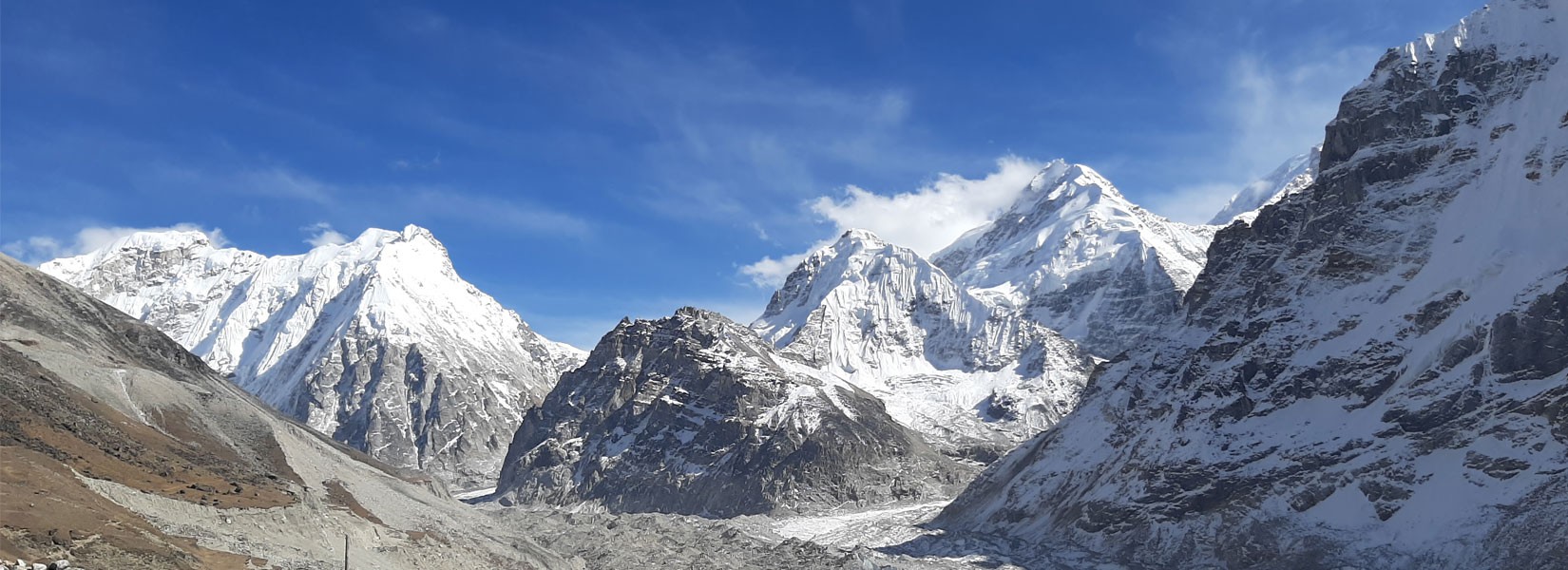
Enjoy trekking through the eastern corner of Nepal and experience the remoteness of one of the quaintest Himalayan settings in the Kanchenjunga Base Camp Trek. Located on the foothill of the 3rd highest mountain in the world- Mt. Kanchenjunga (8586m), Kanchenjunga Base Camp Trek takes you on an adventurous journey through the off-beat path of Kanchenjunga Conservation Area. Locals regard the mountain as the abode of Gods who bestow prosperity and goodwill on them and their lands. The trek offers spectacular mountain scenery, exotic flora and fauna, and rich local culture.


The 27-day affair begins upon your arrival at Kathmandu followed by a scenic flight to Biratnagar located in the southeast Terai region of Nepal. A short drive north will take you to Basantapur, Terhathum from where you’ll commence your trek. The trek gradually advances through the forested hills to the high mountain inside Kanchenjunga Conservation Area. You’ll walk past Chauki, Gupha Pokhari, Dobhan, Mitlung, Chirwa, Sukethum, Amjilosa, Gyabla, Ghunsa, Kambachen, and Lhonak to Pangpema or Kanchenjunga North Base Camp. After exploring the base camp area, the trail drops down the usual route through Ghunsa, Selele La Pass (4480m), Sinion La Pass (4646m), Tseram, Ramche, Tortong, Yamphudin, Khebang, and Phakholing, to Tharpu. You’ll catch a commute back to Bhadrapur from where you’ll catch a connecting flight back to Kathmandu. Most of the trail lies inside Kanchenjunga Conservation Area which is known for its rich and exotic wildlife including Impedance Pheasant, Red–Billed Blue Magpie, Shy Dragon, Himalayan Black Bear, Musk Deer, and the rare Snow Leopard and Red Panda. The quaint villages of Kanchenjunga trail are inhabited by Limbu, Rai, Tamang, Brahmin, and Chhetri tribes. The lower elevation regions offer denser settlements, while the higher altitude is gifted with the sparsely populated Tibetan-styled villages. You will also get to witness the scenic view of Oktang Glacier, Kanchenjunga glacier, and the entire Kanchenjunga massif.

At Himalaya Summit Club, we serve by our motto of providing the finest services to our clients. While you enjoy your journey in the land of the Himalayas, Nepal, we make sure that it is thoroughly enjoyable. From accommodation and transportation to obtaining permits for your trips, we will assist and guide you on every step of the journey.

Trip highlights of Kanchenjunga Base Camp Trek

  • Trek through the lushly forested trails of Eastern Nepal
  • Enjoy the wild flora and fauna of Kanchenjunga Conservation Area
  • Trek to the Kanchenjunga Base Camp and enjoy the majestic scenery of Kanchenjunga massif
  • Enjoy the Tibetan-influenced culture in the villages along the trek

Travel Itinerary

Upon your arrival in Kathmandu, our representative will warmly receive you at the airport and escort you to your hotel. Once at the hotel, you will meet your guide and discuss the trip. In the evening, you can take a stroll around the market to purchase trek accessories, snacks, or goodies for this trek. Overnight stay at a hotel in Kathmandu.

After having your breakfast at the hotel, you’ll embark on a short flight to Biratnagar located in the southeast of Nepal. Biratnagar lies 237 km southeast of Kathmandu in the Terai region of Nepal. After a brief layover, you’ll catch a commute and drive to Basantapur, Terhathum. Overnight stay at Basantapur.

The trek commences at Basantapur and gradually advances through the lushly forested hills to the village of Chauki. During the final parts of the trek, you pass Deurali and trek along the Tinjure Danda to reach Chauki. At Chauki, on a clear day, you will witness the majestic panorama of Kanchenjunga and Makalu peaks in the distance. Overnight stay at Chauki.

Duration: 7h

You’ll leave Chauki and trek north to Gupha Pokhari, a popular local tourist destination in Eastern Nepal. The uphill trek from Chauki advances through the lush rhododendron forest all the way the village of Gupha Pokhari (2900m) where you’ll find a pristine natural pond overlooking the beautiful valley. This pond is also revered by both Hindu and Buddhist pilgrims. Overnight stay at Gupha Pokhari.

Duration: 4h

You’ll leave Dobhan and trek downhill through the rhododendron forests to the village of Gorja Gaon. A short downhill hike will bring you to Dobhan village. It may take almost 7 hours to trek downhill through Gorja Gaon to reach Dobhan. Dobhan, at 645m, is the lowest altitude you’ll reach during the trek. The village is mostly inhabited by the indigenous Rai and Limbu tribes. Overnight stay at Dobhan.

Duration: 7h

Leaving Dobhan, you’ll begin trekking through the picturesque landscape and lushly forested trail towards Mitlung. From Dobhan, the trek heads on roadside tracks for a while to reach Khamlung. Later, you pass Khaireni and Hirebu. The trek progresses along the Tamor River to reach Mitlung. Mitlung is situated south to the confluence of Tamor and Sisne rivers. Overnight stay at Mitlung.

Duration: 6h

Crossing the suspension bridge you’ll start ascending uphill through the densely forested trail with narrow gorge to the village of Chirwa. The route goes through Pithu village and passes numerous small settlements to reach Tawa. Heading northeast, the trek concludes at Chirwa. The traditional village of Chirwa is mostly inhabited by Rai, Tamang, and Limbu ethnic groups. Overnight stay at Chirwa.

Duration: 6h

Leaving Chirwa, you’ll begin walking along the Ghunsa River and through the Tamor River valley towards Sukethum. The trek reaches Taplethok and continues to Temewa before reaching Sukethum. At Sukethum, you also enter the Kanchenjunga Conservation Area. Crossing Simbuwa River followed by another crossing of Chatte1576m River takes you to Sukethum. Overnight stay at Sukethum.

Duration: 5h

Leaving Sukethum, you’ll encounter entirely an uphill trek. The trail goes along the Ghunsa River up north. Passing Jongim and Solima, the trek continues along Chanjalung Danda to arrive at Amjilosa. The continuous uphill ascent may take well over 5hr to reach Amjilosa from Sukethum. The village is mostly inhabited by the indigenous Sherpa tribe. Overnight stay at Amjilosa.

Duration: 5h

Today, you trek through the sparsely forested area to Kanchenjunga Conservation Area. You head towards Thyanyani and cross Saekang River. You’ll further pass through the dense bamboo, fir and rhododendron forests in between and trek uphill to reach the large Tibetan-settlement village of Gyabla. Here, you can explore the village and taste local cuisines. Overnight stay at Gyabla.

Duration: 4h

You’ll begin trekking eastward of Gyabla and walk few hours to reach Phale village. Phale is popular for its handmade Tibetan carpets and rugs which is a very popular export of the village. The trail, hereon, passes along the Lumba Sumba Pass (5160m) around Makalu and advances towards Ghunsa. Overnight at Ghunsa.

Duration: 5h

Today, you’ll spend time exploring Ghunsa village. It is a beautiful Tibetan village located above 3000m. Because of the high altitude, it’s essential that you spend time acclimatizing before ascending further. You can take an easy stroll around the village and explore the Tibetan settlement, beautiful Buddhist monastery, and majestic sceneries. Overnight stay at Ghunsa.

Leaving Ghunsa you’ll trek upward and enter Kanchenjunga Conservation Area. You’ll walk past meadows with wildflower and rhododendron along with pine forests on both sides of the trail. You’ll arrive at Rampuk Kharka from where you can catch the spectacular view of Mt. Januu (7711m), Phole Peak (6645m), Sobi Thongje (6652m), and Ghabur Peak (6044m). A few hours of the trek will bring you to Kambachen from here. Overnight stay at Kambachen.

Duration: 6h

Today it will be a challenging trek as you leave Kambachen and make your way north to the village of Lhonak. From Kambachen, it’s a decent 5-6hr hike to Lhonak village. From here you can catch the spectacular views of Kanchenjunga (8586m), Wedge Peak (6750m), Ramtang Peak (6700m), and Table Shikha (6,510m) among a plethora of other peaks. You’ll pass through Ramtang village and trek further to arrive at Lhonak. Overnight stay at Lhonak.

Duration: 6h

Today is the ultimate day as you leave Lhonak and trek to Kanchenjunga North Base Camp (5143m) or Pangpema. It may take almost 6hr from Lhonak to reach the base camp. You’ll mostly encounter rugged trail with snow and rock. Once at the base camp, you can enjoy the wonderful view of Kanchenjunga Glacier and the various summits of Kanchenjunga, Januu Himal, and Chang Himal ranges up close. Afterward, you’ll trek back to Lhonak.

Duration: 6h

Leaving Lhonak, you’ll start descending to the village of Ghunsa; however, it’s a fairly easy trek hence you’ll enjoy the day. You can enjoy the surrounding view of the mesmerizing mountains en route to Ghunsa. The trek will descend for most of the occasions and follows the Tamor River. Overnight stay at Ghunsa.

Duration: 7h

From Ghunsa, you’ll trek through the beautiful Pine, Birch, and Rhododendron forest towards Selele La Base Camp. The trek initially crosses the Selele La Pass (4480m) before making the descent to the base camp. It may take an ample amount of trek to the top of Selele La Pass (4480m), nevertheless, the views from the top are worthwhile of the rigorous climb. Mountains in Kanchenjunga and Sharphu ranges can be witnessed from the top. Later, you head to the Selele La Base Camp. Overnight stay at Selele La Base Camp.

Duration: 6h

From Selele La Base Camp, you’ll advance towards the Tibetan-styled village of Tseram (3870m). The trek on this day also crosses a high mountain pass by the name of Sinion La Pass (4646m). The panorama of Himalayas and glorious landscapes from the top of the pass are genuinely astounding. Then, you continue the trek and descend to Tseram. If the weather is clear, you can see the highest mountain on Earth, Mt Everest (8848m) from Tseram. Overnight stay at Tseram.

Duration: 8h

Leaving Tseram, You’ll trek uphill to the village of Ramche. After lunch, you can explore the Yalung glacier and Oktang monastery. The monastery is not just a religious symbol but a great vantage point to observe the peaks in Kanchenjunga, Kabru, and Simhalila ranges. After exploring the easternmost skirts of the Kanchenjunga region and Nepal, you return to Ramche. Overnight stay at Ramche.

Duration: 7h

From Cheram, you’ll make your way downhill to Tortong (2995m). Just a juncture ahead, you’ll encounter a Y-junction trail which leads directly to Selele La Pass on the right. You’ll take a left turn and trek towards Tortong passing lush rhododendron forest along Simbuwa River. Crossing Anda Phedi, you trek for a couple of hours to arrive at Tortong. Overnight stay at Tortong.

Duration: 7h

Leaving Tortong, you’ll trek from to Yamphudin village which is an easy downhill trek. You’ll pass through the lushly forested trail with lots of rhododendron bushes on both sides and walk past Lasiya Danda before reaching Yamphudin. On this day, the trek trail is opposite of the Deurali Danda for its entirety. Overnight stay at Yamphudin.

Duration: 7h.

From Yamphudin, you’ll trek towards Mamankhe (1785m). An easy downhill trek from Mamankhe will bring you to beautiful ridges and a waterfall at Khebang village. Before arriving at Khebang, you cross the Ratadanda and Sangading. The day also entails crossing two hilly passes by the names of Ghatichhinne Bhanjyang and Kechana Bhanjyang. Overnight stay at Khebang.

Duration: 7h

Leaving Khebang, you’ll trek downhill to the village of Phakholing. Today is a long day with the 1000m drop over 6km to Dobhan for the lunch stop and another straight trek to the village of Phakholing. As the trek for the day nears its end, you also cross Khanigaon and Limbuding. Overnight stay at Phakholing.

Duration: 7h

Today is the last day of the trek as you finish with the 1200m climb to the village of Tharpu. You will basically take it easy and enjoy last glimpses of Kanchenjunga range from the vantage point of the village to end the trek. The trek crosses Kabeli River and concludes at the settlement of Tharpu. Overnight stay at Tharpu

Duration: 4h

You’ll catch a commute from Tharpu to Bhadrapur. The 190km drive will take you directly to the airport at Bhadrapur. The drive cuts through seven narrow ranges with over 100 hairpin turns and endless windings. It may well over 8hr to reach Bhadrapur. Overnight stay at Bhadrapur.

Duration: 9h

Today, you’ll catch a connecting flight back to Kathmandu. The scenic flight will take you over the lush forests and colorful settlements of Eastern Nepal back to Kathmandu. In Kathmandu, enjoy the hotel amenities or head to the wellness centers in the valley for relieving your tired bodies. Overnight stay at a hotel in Kathmandu.

Duration: 1300m

Today, you’ll drive back to the airport to catch your flight back home. A Himalaya Summit Club representative will accompany you as the journey comes to an end and you head to your destination.

Want a trip tailored just for you?
Customize Trip

What's Included

Cost Includes
  • Pickups and drops from hotels and airport.
  • Accommodations in 3 star hotels in Kathmandu (Mandala Boutique Hotel or Yatri Suites spa Hotel or Hotel Marsyngdi ) with Breakfast.
  • All meals during the trek
  • Welcome and farewell dinners
  • Domastic flight from Kathmandu – Biratnagar/bhadrapur – Kathmandu.
  • Transportation on a comfortable private vehicle as per the itinerary
  • Guided city tour in Kathmandu by private vehicle
  • An experienced English-speaking UIAA certified trek leader (trekking guide), assistant trek leader (4 trekkers: 1 assistant guide) and Sherpa porters to carry luggage (2 trekkers: 1 porter) including their salary, insurance, equipment, flight, food and lodging
  • Kanchenjunga special trekking permit and all government taxes.
  • TIMS / Trekking permit, National park / Conservation entry fees.
  • A comprehensive medical kit
  • All government and local taxes
Cost Excludes
  • Nepalese visa fee
  • International airfare to and from Kathmandu
  • Excess baggage charges
  • Lunch and dinner in Kathmandu and Pokhara
  • Extra night accommodation in Kathmandu and Pokhara in case of early arrival, late departure, and early return from the mountain(due to any reason) than the scheduled itinerary
  • Airplane fare
  • Travel and rescue insurance
  • Personal expenses (phone calls, laundry, bar bills, battery recharge, extra porters, bottle or boiled water, shower etc)
  • Tips for guides and porters

Useful Info

The Trekking Group

For the Kanchenjunga Base Trek, there will be one UIAA Certified Trek leader, assistant Trek leader (4 trekkers:1 assistant guide) and Sherpa porters for luggage carrying (2 trekkers:1 porter) This arrangement ensures that should anybody in the group is sick, the trip can still go ahead as planned. We can run the trek for groups of any size, but usually, it is a maximum of twelve people as we’ve found this to be the optimum size for a successful trip. However, if you’d like to book this trip for a large group then that can be arranged too.

Accommodations

We will be staying at Hotel Marshyandi/Moon light Hotel/Yatri Suites Spa Hotel in Kathmandu and teahouses during the trek. All accommodations are on twin-shared basis. Single supplement will be served on request and will cost an additional USD. Himalaya Summit Club will arrange rooms with attached washrooms; however, teahouses in some places only have shared washing and toilet facilities. Also note that single rooms are readily available in Kathmandu and the trekking regions at lower elevation but it might be difficult to find them at higher elevations.

Meals

During our trek, we can enjoy authentic Nepalese food as well the more common international cuisine (Tibetan, Continental, Italian, Indian, etc.). Breakfast and dinner will be served from the teahouse or from a lodge menu where we spend the night whereas lunch will be served on the way to the next destination. All meals will be provided during trekking while only breakfast will be available in Kathmandu . There will also be welcome and farewell dinners for guests.

Travel Insurance

It is a condition upon joining any of Himalaya Summit Club trips that all clients be insured for comprehensive expenses that might incur due to medical issues or accidents (this includes air ambulance, helicopter rescue, and treatment costs). Please note that we don’t arrange or sell insurance.

Acclimatization

This trek’s itinerary is planned with a high degree of awareness of AMS (Acute Mountain Sickness). Going up at higher altitudes too fast causes a medical condition serious enough to result in death. The higher the altitude, the less oxygen will be in the air. For example, at an altitude above of 5000m, there is 50% less oxygen than at sea level. Therefore, our body needs many days to adapt to an environment with less-oxygen. During this trip, a separate day is set aside in Ghunsa and Lhonak for acclimatization.

Himalaya Summit Club advises guest(s) with known heart, lungs or blood diseases to consult their doctor before traveling. Mild headaches, fever, loss of appetite or stomach disorders are symptoms of AMS. Check out “Altitude illness” by Dr Jim Duff, whether once you getting in Kathmandu you can we will arrange to meet with Expedition Doctor Mr. Nima Namgel Sherpa. Himalaya Summit Club itineraries are designed to try to prevent AMS as much as possible. But, it is important to remember that some visitors are more vulnerable than others.

Physical Condition & Experience Requirements

This is a moderate trek suitable for passionate walkers who have the ability to walk at least 5-7 hours a day with a light day pack. Walking in higher altitudes is more physically demanding than walking in lower altitudes; however, if we are in excellent health with average physical fitness and have a positive attitude, self confidence and strong determination, we can accomplish this trek successfully. Exercising and jogging regularly for some weeks prior to the trip is a good idea to enhance our strength and stability. Past hiking experience would be an asset but no technical skill is required for this trip. It is vital for participants with pre-existing medical conditions such as heart, lung, and blood diseases to consult their doctor before taking the trip. It is also advised that you inform Himalaya Summit Club before booking the trek.

Best Time to Travel

Spring (March to May) and Autumn (September to November) are the best months for this trip. Although this trip can be taken during winter, there might be a problem due to obstructed pass due to ice or snow. The trekking routes are crowded during Spring and Autumn but during Monsoon and Winter the routes are not packed and we could enjoy rather best of nature.

Equipments & Packing List

This list is a guideline to help you pack for your adventure. Also understand that the items listed below will vary a little according to the season and the trek duration. The weight limit for your luggage is 33 pounds or 15 kg. Remember that your luggage will be carried by your porter but you are required to carry a day-pack (with your valuables or anything important) on your own. We also suggest that you pack only what is necessary.

Important documents and items

  • Valid passport, 2 extra passport size photos, airline tickets
  • Separate photocopies of passport, visa form (easily obtained at Kathmandu airport), proof of insurance
  • Dollars, pounds or Euros in cash for purchasing Nepalese visa at Kathmandu airport, for paying for restaurants and hotels, for gratuities, snacks, and to purchase your own drinks and gifts
  • Credit cards, Bank/ATM/Cash machine cards for withdrawing funds from cash machines (bring a photocopy of your cards), traveler’s checks, etc.

Head

  • Bandana or head scarf, also useful for dusty conditions
  • Warm hat that covers your ears (wool or synthetic)
  • Headlamp with extra batteries and bulbs
  • Sunglasses with UV protection
  • Prescription sunglasses (if required)

Upper Body

  • Polypropylene shirts (1 half sleeve and 2 long sleeves)
  • Light and expedition weight thermal tops
  • Fleece wind-stopper jacket or pullover
  • Waterproof (preferably breathable fabric) shell jacket
  • Down vest and/or jacket
  • Gore-Tex jacket with hood, waterproof and breathable

Hands

  • 1 pair of lightweight poly-liner gloves.
  • 1 pair of lightweight wool or fleece gloves
  • 1 pair of mittens, consists of 1 Gore-Tex over mitt matched with a very warm polar-fleece mitt liner (seasonal)

Lower Body

  • Non-cotton underwear briefs
  • 1 pair of Hiking shorts
  • 1 pair of Hiking trousers
  • 1 pair of lightweight thermal bottoms (seasonal)
  • 1 pair of fleece or woolen trousers
  • 1 pair of waterproof shell pants, breathable fabric

Feet

  • 2 pairs of thin, lightweight inner socks
  • 2 pairs of heavy poly or wool socks
  • 1 pair of Hiking boots with spare laces (sturdy soles, water resistant, ankle support, broken in )
  • 1 pair of trainers or running shoes and/or sandals
  • Cotton socks (optional)
  • Gaiters (winter only), optional, low ankle high version

Sleeping

  • 1 sleeping bag (good to -10 degrees C or 14 degrees F)
  • Fleece sleeping bag liner (optional)

Rucksack and Travel Bags

  • 1 medium rucksack (50-70 liters/3000-4500 cubic inches, can be used for an airplane carryon)
  • 1 large duffel bag
  • A small daypack/backpack for carrying your valuables, should have good shoulder padding
  • Small padlocks for duffel-kit bags
  • 2 large waterproof rucksack covers (optional)

Medical

  • first-aid kit. (simple and light)
  • Aspirin, first-aid Small, personal tape, and plasters (Band-Aids)
  • 1 skin-blister repair kit
  • Anti-diarrhea pills
  • Anti-headache pills
  • Cough and/or cold medicine
  • Anti-altitude sickness pills: Diamox or Acetylzolamide
  • Stomach antibiotic: Ciprofloxacin, etc. Do not bring sleeping pills as they are a respiratory depressant.
  • Water purification tablets or water filter
  • 1 set of earplugs
  • Extra pair of prescription glasses, contact lens supplies

Practical Items

  • 1 small roll of repair tape, 1 sewing-repair kit
  • 1 cigarette lighter, 1 small box of matches
  • 1 compass or GPS(optional)
  • 1 alarm clock/watch
  • 1 digital camera with extra cards and batteries
  • large Ziplocs
  • 2 water bottles (1 liter each)
  • 1 small folding knife
  • Binoculars (optional)
  • 4 large, waterproof, disposable rubbish sacks

Toiletries

  • 1 medium-sized quick drying towel
  • Toothbrush/paste (preferably biodegradable)
  • Multi-purpose soap (preferably biodegradable)
  • Deodorants
  • Nail clippers
  • Face and body moisturizer
  • Female hygiene products
  • Small mirror

Personal Hygiene

  • Wet wipes (baby wipes)
  • Tissue /toilet roll
  • Anti-bacterial hand wash

Extras/Luxuries

  • Reading book
  • Trail map/guide book
  • Journal and pen
  • iPod
  • Travel game i.e. chess, backgammon, scrabble, playing cards (to help you pass the time at teahouses and/or camps)
  • 1 modest swim suit
  • Binoculars (optional)
  • Voltage converter (from 220 to 110)
  • Plug adapter (2 round pegs to 2 flat pegs)
  • Lightweight pillow case (in case your teahouses provide you with pillows) or use your own stuff as a pillow

Ratings & Reviews

0/5
-
Based on 0 reviews
Excellent
0
Very Good
0
Average
0
Poor
0
Terrible
0
How was your experience with us?
All Inclusive Price

26 Nights 27 Days

  • Instant Booking
  • No Hidden Costs
  • Secure Payments
  • 24/7 Support
Tulsi
 Talk to Expert (Tulsi )
+9779841239938
Kishan
 Talk to Expert (Kishan )
+9779846431447 (English | Français)
You May Also Like

Similar Packages

View All Packages
https://dev.softwareinfosys.com.np/hsc/everest-3-passes-trek-with-3-peaks-summit-expedition

Everest 3 Passes & 3…

Duration 25 Days
Activity Peak Climbing
Grade Technical Challenging
  • review user
  • review user
$3750 $3250 Per Person
https://dev.softwareinfosys.com.np/hsc/mt-annapurna-i-expedition

Mt. Annapurna-I Expedition

Duration 40 Days
Activity Expedition
Grade Technical Challenging
https://dev.softwareinfosys.com.np/hsc/mt-ama-dablam-expedition-beauty-challenge-combined

Ama Dablam Expedition – Beauty,…

Duration 31 Nights 32 Days
Activity Expedition
Grade Technical Challenging
  • review user
  • review user
  • review user
$7860 $7150 Per Person
newsletter

Receive Travel Inspirations

We're affiliated with
  • Nepal Government
  • NTB
  • TAAN
  • NMA
Professional Affiliations
  • Nepal National Mountain Guide
  • IFMGA