Island Peak with Everest Base camp Trekking

Island Peak with Everest Base camp Trekking

based on Reviews
based on 120 Reviews on Google

+977 9841239938

info@himalayansummitclub.com     himalayansummitclub@gmail.com
Destination
Nepal
Region
Everest Region
Start/End Point
Kathmandu / Kathmandu
Activity
Peak Climbing
Duration
18 Nights 19 Days
Group Size
2-15
Accommodation
Lodge + Camping
Grade
Moderate
Max.Altitude
6189m
Meals
Breakfast + Lunch + Dinner
Transport
As Per Itinerary

Overviews

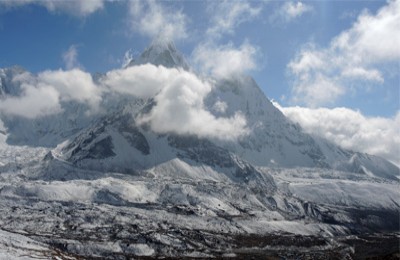
Island Peak (6189m) has established a glorious identity of its own among a parade of some of the most illustrious peaks like the Mt. Everest (8848m) and Mt. Lhotse (8,414m). This mountain has enthralled travelers and trekkers for quite a while. People who wish to dwell deep in the adversities of the Khumbu region can test their will by scaling the Island Peak. A complete package of thrill and jaw-dropping experience makes the Island Peak trek stand out from any other trek that’s out there.The Island Peak Climbing combined with the Everest Base Camp lasts for a whopping 19 days. Like many other treks, it commences from Kathmandu. Get on a flight and arrive at Lukla which is often called the Gateway of the Everest region. Begin the walk to Phakding, and get some glimpse about life in the snowy parts. Crossing the Dudh Koshi River leads us to Namche Bazaar. We walk uphill to visit the Tengboche Monastery and after resting for a while at Pangboche, we head towards Pheriche. As we observe the enigma of the Khumbu glacier, we find ourselves on the road to Lobuche. We visit the Gorakshep Lake and make our way to the Everest Base Camp. Later, wewitness the glorious sunrise from Kalapatthar. After observing the sunrise, we head back to Lobuche and later head towards Chhukung via Kongma La Pass (5,535m). After doing some training with the equipment, we head to the summit of the Island Peak and follow the trail that ultimately leads to Pangboche. The descending trail leads us to Namche Bazaar, and we can relax a bit once we arrive at Lukla. If you are willing to take this trip then it is highly recommended that you carry appropriate clothing and do it from the mid of October to the mid of December.Flanked with seasoned guides and professionals, Himalaya Summit Club is the pioneer in the trekking and travel industry. Along with excellent services for the trip, we also allow you to customize your trips as per your preferences. Join us in making an unforgettable experience.

Trip highlights of Island Peak with Everest Base camp Trekking

  • Witness the spectacular sunrise from the Kalapatthar viewpoint
  • Interact with the locals in the Sherpa villages and witness their culture
  • Reach the base camp of the highest peak on Earth, the Everest Base Camp
  • Cross the Kongma La Pass (5535m), the highest mountain pass in Everest region
  • Visit monasteries and religious hubs in the Everest region including monasteries in Tengboche and Pangboche

Travel Itinerary

A representative of Himalaya Summit Club will receive you upon arriving at the Tribhuvan International Airport in Kathmandu. A short drive later, you reach your hotel where you can rest and unpack your belongings. For the rest of the day, you can visit the city. Overnight stay at a hotel in Kathmandu.

Accomodation:Hotel
Place:Kathmandu
Altitude:1300m

Today, we shall stay in the hotel and prepare ourselves for the upcoming trek. Meet our guides and porters who will accompany you on the trip. Interact with them and learn the basics of trekking. Instead, we can also arrange an exploration tour around the UNESCO heritage sites in the Valley. Pashupatinath, Boudhanath, Swayambhunath, and Kathmandu Durbar Square are the revered destination in the capital. Overnight stay at a hotel in Kathmandu.

Accomodation:Hotel
Place:Kathmandu
Altitude:1300m

Enjoy a hearty breakfast and immediately head to the Tribhuvan International Airport for a flight to Lukla. The thrilling flight provides awesome scenery of the Khumbu region and the airport is bound to scare you. Collect all your stuff and head on the trail to Phakding. Walk through the Himalayan terrain and settle in the quaint village of Phakding. Overnight stay at Phakding.

Accomodation:Lodge
Place:Lukla-Phakding
Altitude:2610m
Duration: 3-4 hours trek (8KM)

We shall venture through pine forests and walk along the banks of the Dudh Koshi river. We will be greeted by the amazing Mt. Thamserku (6,608m) and we can catch glimpses of the Mount Everest (8,848m) as well form the Lhotse and Nuptse ridge. We continue our trek until we arrive at the bustling settlement of Namche which is the biggest Sherpa settlement in the Everest region. Overnight stay at Namche Bazar.

Accomodation:Lodge
Place:Namche
Altitude:3440m
Duration: 5-6 hours

Today is a day separated for acclimatization. We can use this day to explore the outskirts of the Namche Bazar. Hike up to the Everest view hotel which is often called as the highest elevation hotel in the world. You can hike to the Khumjung village and visit the Khumjung Monastery as well. Overnight stay at Namche Bazaar.

Accomodation:Lodge
Place:Namche
Altitude:3440m

We initially head to Phunki and later follow the route leading to Tengboche. After visiting the famed Tengboche monastery, we venture into the Sagarmatha National park. We can observe the cinematic view of mountains like the Mt. Everest (8,848m), Nuptse (7,861m), Lhotse (8,414m), Ama Dablam (6,856m), and Thamserku (6,608m). Walk in the sparsely vegetated trails which later transform into snowy ones. We arrive at Tengboche during the night. Overnight stay at Tengboche.

Accomodation:Lodge
Place:Tengboche
Altitude:3860m
Duration: 5- 6 hours

The route to Pheriche provides an amazing view of the surrounding environment. We descend through the forests for about an hour and later cross the river. We later have to do some climbing and we take a quick lunch break in the village of Pangboche. From Pangboche, it’s a short walk to Pheriche. Overnight stay at Pheriche.

Accomodation:Lodge
Place:Pheriche
Altitude:4371m
Duration: 4-5 hours

On this day, you can rest and acclimatize to the climate as the altitude on the trek reaches a staggering number of 4,410 meters. At Dingboche, you can explore the Sherpa settlements and local areas around the village. A hike to Nangkar Tshang (5,116m) reveals a panorama of Makalu (8,463m), Lhotse (8,516m), Lhotse Shar (8,393m), and Island Peak (6,189m). After witnessing such glorious views, you descend back to Pheriche. Overnight stay at Pheriche.

Accomodation:Lodge
Place:Pheriche
Altitude:4371m

From Pheriche, the road is easy until Dughla. We have to climb the steep moraine of the Khumbu glacier and then we shall pass the boulder steps of the ChupkiLhara. We can find prayer flags and memorial sites here. The trail, later, continues through the moraine of the Khumbu glacier and we can observe delightful ranges of Khumbutse, Lingtren, Pumo RI, and Mahalangur Himal. Overnight in Lobuche.

Accomodation:Lodge
Place:Lobuche
Altitude:4910m
Duration: 5-6 hours

The road to Everest base camp goes through the Gorakshep Lake. The walk is a combination of strenuous trails and tricky terrains. We shall venture through rocky dunes and streams before reaching the Everest base camp. The Everest Base Camp is decorated with colorful eye-catching tents that stand out in the bland white background. After visiting the base camp, we return to Gorakshep. Overnight stay at Gorakshep.

Accomodation:Lodge
Place:GorakShep
Altitude:5170m
Duration: 6-7 hours

The route for the day sees the temperature drop pretty low as we head on a trek to the viewpoint of Kalapatthar. We will be surrounded by familiar ranges ofLingtren,Khumbutse, and Changtse. The Mt. Everest (8,848m) slowly starts to reveal itself from here. As we battle the snowy terrain, we reach Kalapatthar and from here, we can observe the enchanting appeal of the Khumbu region and Mount Everest (8,848m). From Kalapatthar, we trek back to Lobuche by retracing our steps. Overnight stay at Lobuche.

Accomodation:Lodge
Place:Lobeche
Altitude:4910m
Duration: 7-8 hours

We trek via the Khumbu glacier and head towards the Kongma la base camp. The endearing part of the trail is definitely climbing the Kongma La Pass (5,535m) and we can see Chorten flags on the summit of the pass. We gradually head downwards to the Imja Khola valley and a final descend leads us to Chhukung, a small village inhabited by the Sherpas. Overnight stay at Chhukung.

Accomodation:Lodge
Place:Chukung
Altitude:4730m
Duration: 6-7 hours

The trail to the Base camp is pretty steep. We initially head south and later head east to the main line of the valley. The moraine starts to widen and we can see the Lhotse glacier. The road to the Amphu Lapcha (5,663m) sits on the southeast part. The road is crisscrossed and we can see the Imja Khola and the glacier moraines. We finally arrive at the Island Peak Base Camp where we shall prepare our tents. Overnight stay at Island Peak Base Camp.

After Lunch:

Our guides will teach you the tips and tricks that are needed in order to summit the amazing Island peak. In this training, you shall learn the proper usage of ice axe, climbing boots, harness, and ascender. Proper usage of this equipment will make the climbing trip easier and faster. Overnight stay at Island Peak Base Camp.

Accomodation:Tent Camp
Place:Island Peak Base Camp
Altitude:5020m
Duration: 3-4 hours

Today is the day we shall do the impossible. Wake up early and after a hearty breakfast, head on the snowy terrain. Battle snow and icy winds along the way. We have to climb steep slopes and use the equipment like rope, ice axe, and in some cases ladders as well. Battle crevasses and enjoy the uphill climb before finally reaching the summit of the Island Peak. The peaks of the Mt. Everest (8,848m), Lhotse (8,414m), Nuptse (7,861m), and numerous other peaks fit in the panorama from the top of the peak. After conquering the peak, we head back to the base camp where we shall spend the remainder of the day. Overnight in Island Peak Base Camp.

Duration: 10-12 hours

A relatively easy trail leads us down to the lower altitude. We walk on the wide valley of the Khumbu Khola and we visit some Sherpa villages as well. We can use the trail leading to Upper Pangboche and visit the Gompa there which is believed to be one of the oldest in the Khumbu region. From Pangboche, we can see amazing sights of mountains like Ama Dablam (6,856m), Thamserku (6,608m), and Kangtega (6,636m) to the east. Overnight stay at Pangboche.

Duration: 5-6 hours

Our trail crosses the Imja Khola and deep into the forests of Tengboche. With a short visit in the Tengboche monastery, we again walk through the rhododendron forests. We admire the Dudh Koshi River and reach Sansa. We can even catch glimpses of wildlife like leopards and mountain goats. Our arrival in Namche Bazaar is signaled as we arrive at the army base camp. Overnight stay at Namche Bazaar.

Accomodation:Lodge
Place:Namche
Altitude:3440m
Duration: 4-5 hours

The trail for the day sees a sharp decrease in elevation so be sure to tread carefully. Our shaky legs need to cross the roaring Dudh Koshi and its other tributaries. From here, the trail becomes a bit more leveled and we will arrive in Lukla in a while. Upon arrival in Lukla, head to your hotel. Overnight stay at Lukla.

Accomodation:Lodge
Place:Lukla
Altitude:2840m
Duration: 6-7 hours

Get on an airplane early in the morning and head towards Kathmandu. The flight lasts for about an hour and it shall show you the beauty of the Khumbu region and Kathmandu. On your final day in the country, you can make quick stops at the local markets and buy gifts and souvenirs. Overnight stay at a hotel in Kathmandu.

Accomodation:Lodge
Place:Kathmandu
Altitude:1300

As the Island Peak Climbing with EBC comes to an end, you will get on a scheduled flight to your destination. A company representative will accompany as you drive to the Airport.

Want a trip tailored just for you?
Customize Trip

What's Included

Cost Includes
  • Airport / Hotel / Airport transfers by private vehicle.
  • 3 star categories Hotel Accommodation in Kathmandu including breakfast.(room is twin sharing Base)
  • Guided Tour of Kathmandu City with expert tour guide and private vehicle
  • One lead International Certified Nepalese Mountain Guide (NNMGA/IFMGA), Assistant Climbing Guide (level-2 Mountaineering Done Train Guide) (2 Climbers:1 assistant guide) and porters (1 porter for between 2 Climbers basis) with their food, accommodation, salary, equipment, and accidental insurance, clothing and medicine.
  • All meals during trekking 3 meals a day (Breakfasts, Lunches and Dinners).
  • Climbing Permit for Mt. Island peak and others government permit.
  • Group medical supplies (first aid kit will be available).
  • Himalaya Summit Club duffel bag. ( If you need, please let us know before you book the trip and remind us in our pre- meeting at our office)
  • Comprehensive pre-departure information and trip dossiers
  • Welcome/Fare well Nepali Dinner in Kathmandu
  • All necessary paper works, office Service charge and all Government Taxes
Cost Excludes
  • Lunch and dinner in Kathmandu.
  • Nepal entry visa fee, you can get Nepal visa up on arrival in the Airport.
  • International Airfare/Airport tax, City tour Sightseeing entry fees.
  • Alcoholic, hot and cold drinks, hot water, hot and cold showers during the trek.
  • Personal expenses such as laundry, telephone calls, sweets, snacks, beverages and bar bills, camera battery charging.
  • Travel Insurance (Essential – Should include emergency evacuation coverage while trekking up to 5500+ meters).
  • Personal trekking gears and climbing gears.
  • Tips for tour/ trekking staffs and driver
  • Any others expenses which are not mentioned on Price Includes section.

Useful Info

The Expedition Group

For the Mt.Island peak Expedition, there will be one lead International Certified Nepalese Mountain Guide (NNMGA/IFMGA) Assistant Climbing Guide (level-2 Mountaineering Done Train Guide) (2 Climbers:1 assistant guide) and Sherpa porters for luggage carrying (2 Climbers:1 porter) This arrangement ensures that should anybody in the group is sick, the trip can still go ahead as planned. We can run the Expedition for groups of any size, but usually, it is a maximum of twelve people as we’ve found this to be the optimum size for a successful trip. However, if you’d like to book this trip for a large group then that can be arranged too.

Accommodations

We will be staying at Hotel Marshyandi/Mandala Boutique /Yatri Suites Spa Hotel in Kathmandu and teahouses during the trek. All accommodations are on twin-shared basis. Single supplement will be served on request and will cost an additional USD. Himalaya Summit Club will arrange rooms with attached washrooms; however, teahouses in some places only have shared washing and toilet facilities. Also note that single rooms are readily available in Kathmandu and the trekking regions at lower elevation but it might be difficult to find them at higher elevations.

Meals

During our Expedition, we can enjoy authentic Nepalese food as well the more common international cuisine (Tibetan, Continental, Italian, Indian, etc.). Breakfast and dinner will be served from the teahouse or from a lodge menu where we spend the night whereas lunch will be served on the way to the next destination, where we can find lodges or Home stay. And where starting Tented camp will have our expedition Cook serve will breakfast, Lunch and Dinner with fresh vegetable, fresh meet item sometime and hygienic as well. But above Base camp will alpine style foods. There will also be welcome and farewell dinners for guests.

Travel Insurance

It is a condition upon joining any of Himalaya Summit Club trips that all clients be insured for comprehensive expenses that might incur due to medical issues or accidents (this includes air ambulance, helicopter rescue, and treatment costs). Please note that we don’t arrange or sell insurance.

Acclimatization

This trek’s itinerary is planned with a high degree of awareness of AMS (Acute Mountain Sickness). Going up at higher altitudes too fast causes a medical condition serious enough to result in death. The higher the altitude, the less oxygen will be in the air. For example, at an altitude above of 5000m, there is 50% less oxygen than at sea level. Therefore, our body needs many days to adapt to an environment with less-oxygen.

Himalaya Summit Club advises guest(s) with known heart, lungs or blood diseases to consult their doctor before traveling. Mild headaches, fever, loss of appetite or stomach disorders are symptoms of AMS. Check out “Altitude illness” by Dr Jim Duff, whether once you getting in Kathmandu you can we will arrange to meet with Expedition Doctor Mr. Nima Namgel Sherpa. Himalaya Summit Club itineraries are designed to try to prevent AMS as much as possible. But, it is important to remember that some visitors are more vulnerable than others.

Best Time to Travel

Spring (March to May) and Autumn (September to November) are the best months for this trip. Although this trip can be taken during winter, there might be a problem due to obstructed pass due to ice or snow. The trekking routes are crowded during Spring and Autumn but during Monsoon and Winter the routes are not packed and we could enjoy rather best of nature.

Equipments & Packing List

This list is a guideline to help you pack for your adventure. Also understand that the items listed below will vary a little according to the season and the trek duration. The weight limit for your luggage is 33 pounds or 15 kg. Remember that your luggage will be carried by your porter but you are required to carry a day-pack (with your valuables or anything important) on your own. We also suggest that you pack only what is necessary.

Important documents and items

  • Valid passport, 2 extra passport size photos, airline tickets
  • Separate photocopies of passport, visa form (easily obtained at Kathmandu airport), proof of insurance
  • Dollars, pounds or Euros in cash for purchasing Nepalese visa at Kathmandu airport, for paying for restaurants and hotels, for gratuities, snacks, and to purchase your own drinks and gifts
  • Credit cards, Bank/ATM/Cash machine cards for withdrawing funds from cash machines (bring a photocopy of your cards), traveler’s checks, etc.

Head

  • Bandana or head scarf, also useful for dusty conditions
  • Warm hat that covers your ears (wool or synthetic)
  • Headlamp with extra batteries and bulbs
  • Sunglasses with UV protection
  • Prescription sunglasses (if required)

Upper Body

  • Polypropylene shirts (1 half sleeve and 2 long sleeves)
  • Light and expedition weight thermal tops
  • Fleece wind-stopper jacket or pullover
  • Waterproof (preferably breathable fabric) shell jacket
  • Down vest and/or jacket
  • Gore-Tex jacket with hood, waterproof and breathable

Hands

  • 1 pair of lightweight poly-liner gloves.
  • 1 pair of lightweight wool or fleece gloves
  • 1 pair of mittens, consists of 1 Gore-Tex over mitt matched with a very warm polar-fleece mitt liner (seasonal)

Lower Body

  • Non-cotton underwear briefs
  • 1 pair of Hiking shorts
  • 1 pair of Hiking trousers
  • 1 pair of lightweight thermal bottoms (seasonal)
  • 1 pair of fleece or woolen trousers
  • 1 pair of waterproof shell pants, breathable fabric

Feet

  • 2 pairs of thin, lightweight inner socks
  • 2 pairs of heavy poly or wool socks
  • 1 pair of Hiking boots with spare laces (sturdy soles, water resistant, ankle support, broken in Cotton socks (optional)
  • 1 pair of trainers or running shoes and/or sandals Cotton socks (optional)
  • Gaiters (winter only), optional, low ankle high version

Sleeping

  • 1 sleeping bag (good to -10 degrees C or 14 degrees F)
  • Fleece sleeping bag liner (optional)

Rucksack and Travel Bags

  • 1 medium rucksack (50-70 liters/3000-4500 cubic inches, can be used for an airplane carryon)
  • 1 large duffel bag
  • A small daypack/backpack for carrying your valuables, should have good shoulder padding
  • Small padlocks for duffel-kit bags
  • 2 large waterproof rucksack covers (optional)\

Climbing Gears

  • 1 Helmet
  • 1 Harness
  • 1 Jumar
  • 1 Plydevice
  • 4 Lock carbineer
  • 2 Unlock Carbineer
  • 1 tapselling
  • 1 sets of crampons
  • Climbing boots
  • Ice-axe

Medical

  • first-aid kit. (simple and light)
  • Aspirin, first-aid Small, personal tape, and plasters (Band-Aids)
  • 1 skin-blister repair kit
  • Anti-diarrhea pills
  • Anti-headache pills
  • Cough and/or cold medicine
  • Anti-altitude sickness pills: Diamox or Acetylzolamide
  • Stomach antibiotic: Ciprofloxacin, etc. Do not bring sleeping pills as they are a respiratory depressant.
  • Water purification tablets or water filter
  • 1 set of earplugs
  • Extra pair of prescription glasses, contact lens supplies

Practical Items

  • 1 small roll of repair tape, 1 sewing-repair kit
  • 1 cigarette lighter, 1 small box of matches
  • 1 compass or GPS(optional)
  • 1 alarm clock/watch
  • 1 digital camera with extra cards and batteries
  • large Ziplocs
  • 2 water bottles (1 liter each)
  • 1 small folding knife
  • Binoculars (optional)
  • 4 large, waterproof, disposable rubbish sacks

Toiletries

  • 1 medium-sized quick drying towel
  • Toothbrush/paste (preferably biodegradable)
  • Multi-purpose soap (preferably biodegradable)
  • Deodorants
  • Nail clippers
  • Face and body moisturizer
  • Female hygiene products
  • Small mirror

Personal Hygiene

  • Wet wipes (baby wipes)
  • Tissue /toilet roll
  • Anti-bacterial hand wash

Extras/Luxuries

  • Reading book
  • Trail map/guide book
  • Journal and pen
  • iPod
  • Travel game i.e. chess, backgammon, scrabble, playing cards (to help you pass the time at teahouses and/or camps)
  • 1 modest swim suit
  • Binoculars (optional)
  • Voltage converter (from 220 to 110)
  • Plug adapter (2 round pegs to 2 flat pegs)
  • Lightweight pillow case (in case your teahouses provide you with pillows) or use your own stuff as a pillow

Equipment List

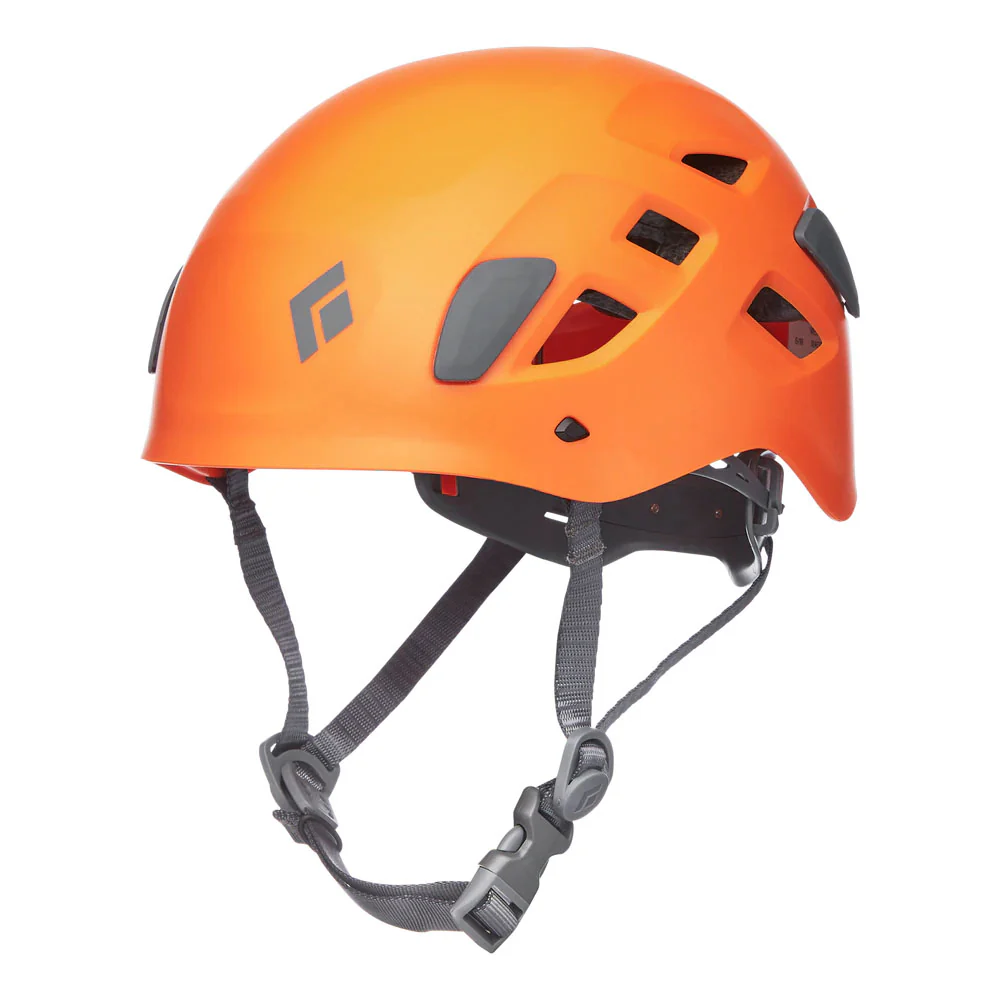
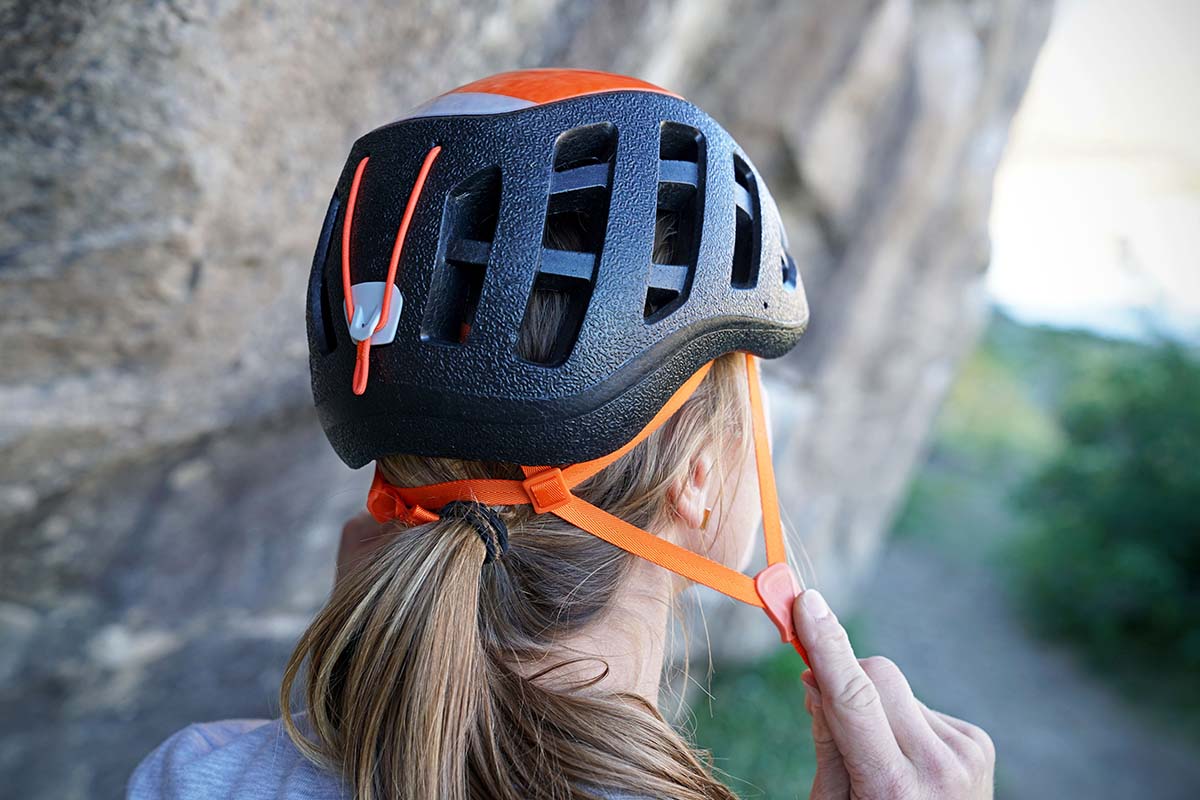
Helmet

A lightweight and secure helmet that protects against falling rocks, ice, and impacts. Must meet UIAA or CE safety standards for alpine use.

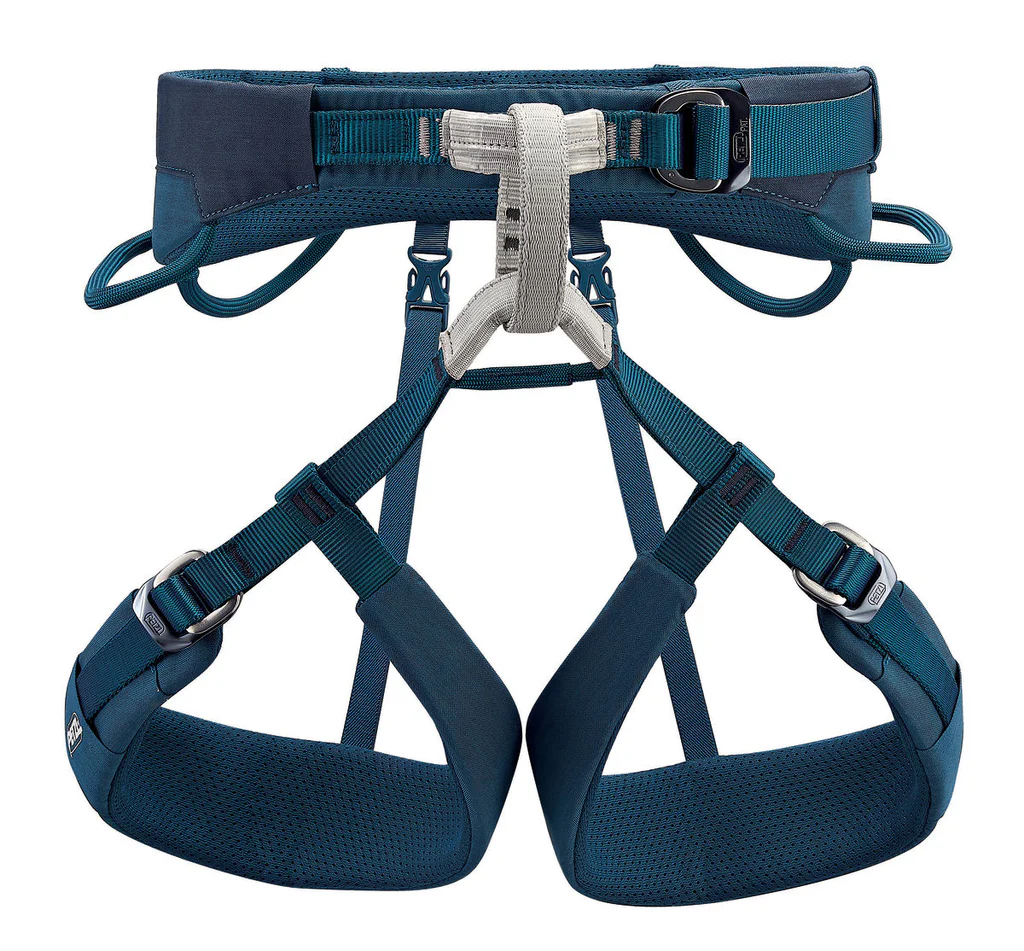
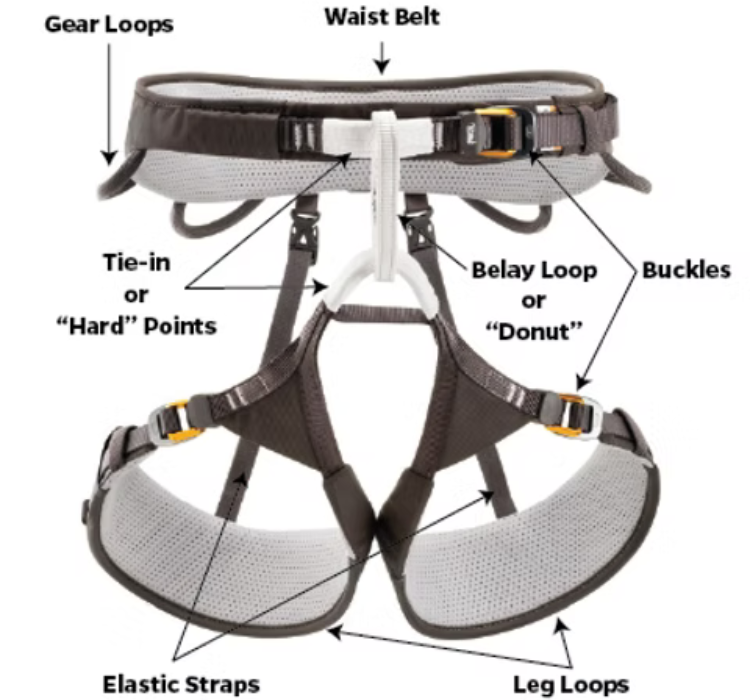
Alpine Harness

An adjustable alpine harness allows a secure fit over multiple layers, with adjustable waist belt and leg loops. A slightly thicker waist belt is recommended for better comfort and support during longer hanging or belaying. Lightweight and durable, it is essential for safe climbing and glacier travel.

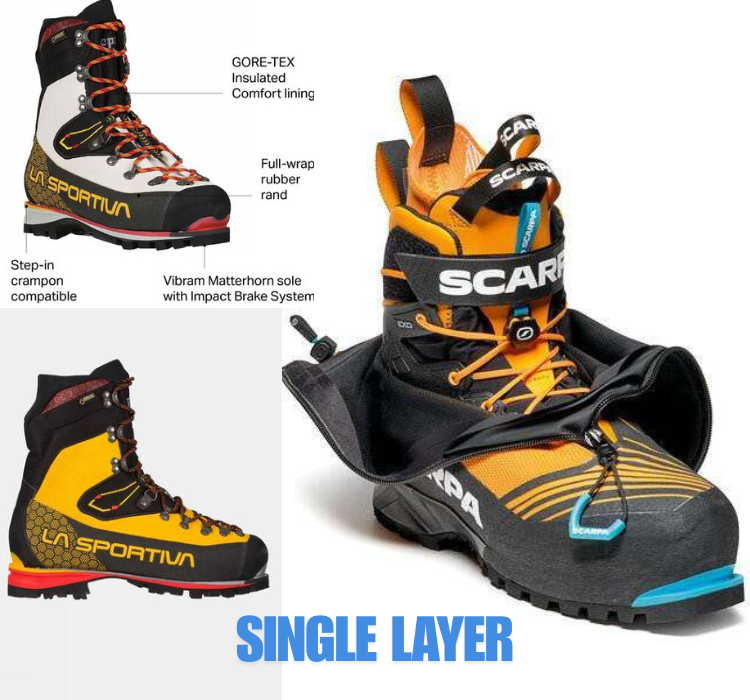
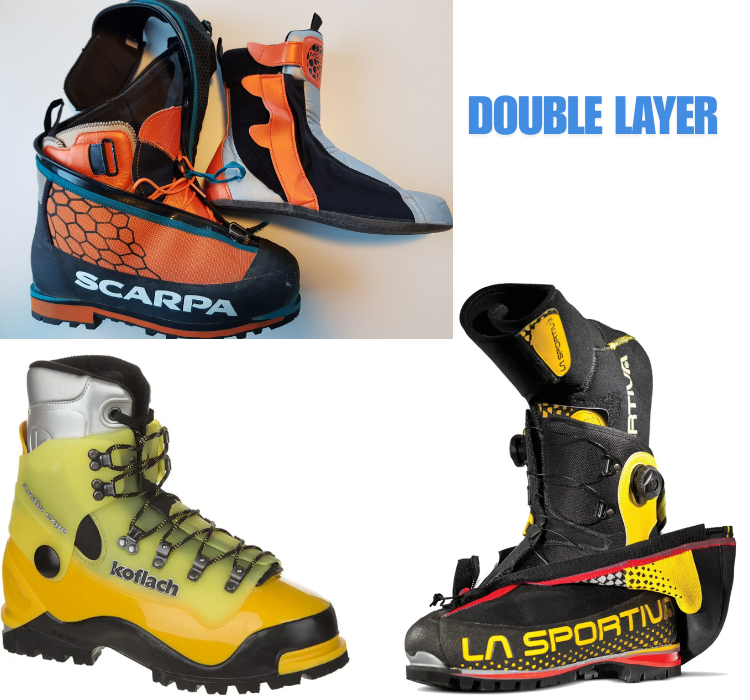
Mountaineering Boot

Mountaineering boots are critical for performance and safety in high-altitude environments, offering insulation, protection, and precise support on snow, ice, and mixed terrain. All boots must be compatible with crampons and suitable for cold, technical conditions. Recommend using B3 category boots, which are fully rigid and designed for technical mountaineering.

For November to March, we strongly recommend double-layer high-altitude boots such as La Sportiva G2 Evo or G2 SM for optimal thermal protection. Advanced single-layer options like Scarpa Phantom 6000, La Sportiva Nepal, or Cube may be used depending on conditions and individual experience.

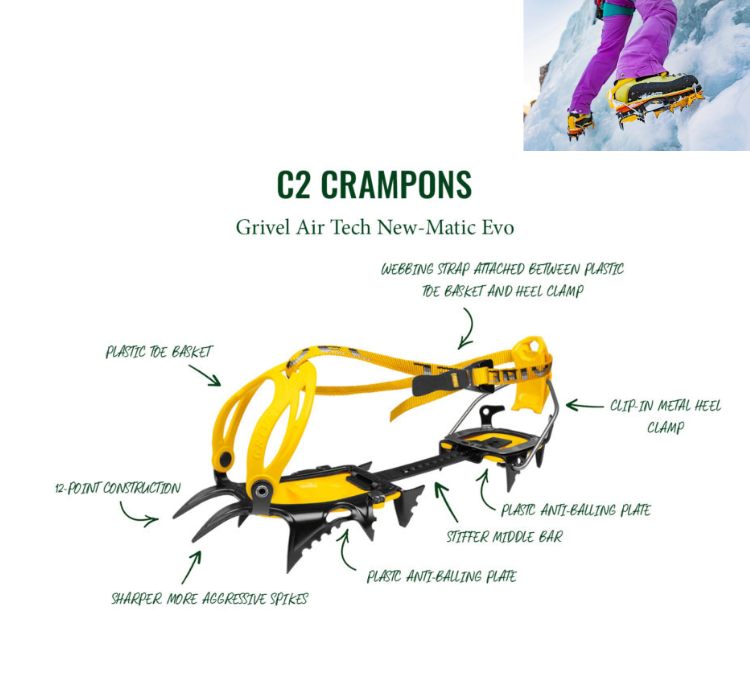
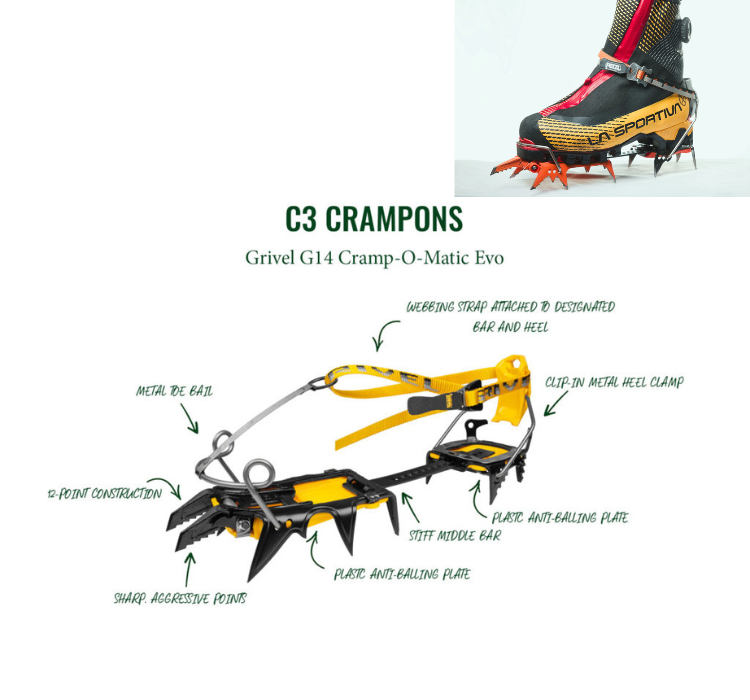
Crampons

Crampons provide essential traction on snow and ice, allowing safe movement in alpine terrain. For mountaineering, C2 (semi-automatic) crampons are recommended for versatility and stability. For Technical ice climbing, C3 (automatic) crampons are preferred, offering a rigid fit and maximum precision.

Recommended models include:
Petzl Vasak, Petzl Sarken, Black Diamond Sabretooth, Grivel G12 (mountaineering)
Petzl Lynx, Black Diamond Cyborg, Grivel G14 (ice climbing)

Ice Axe & Ice Climbing Tools

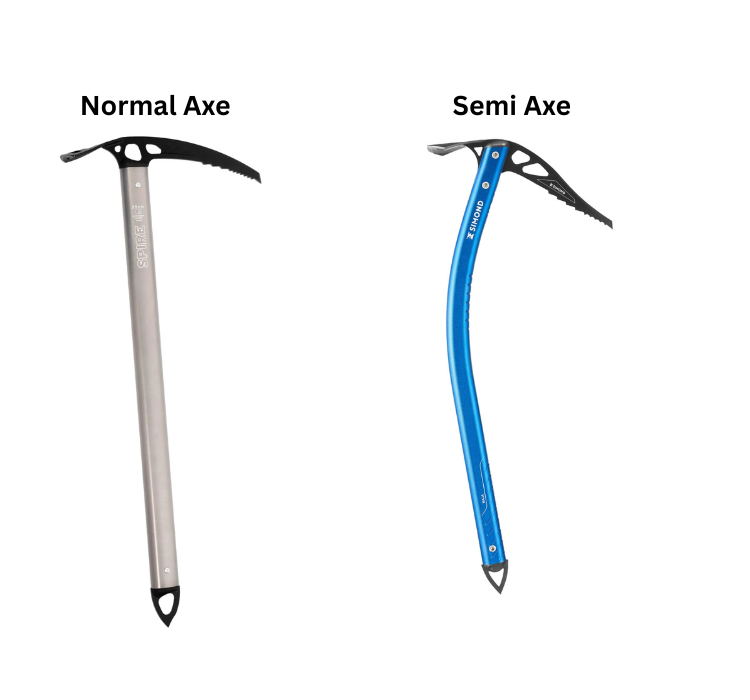
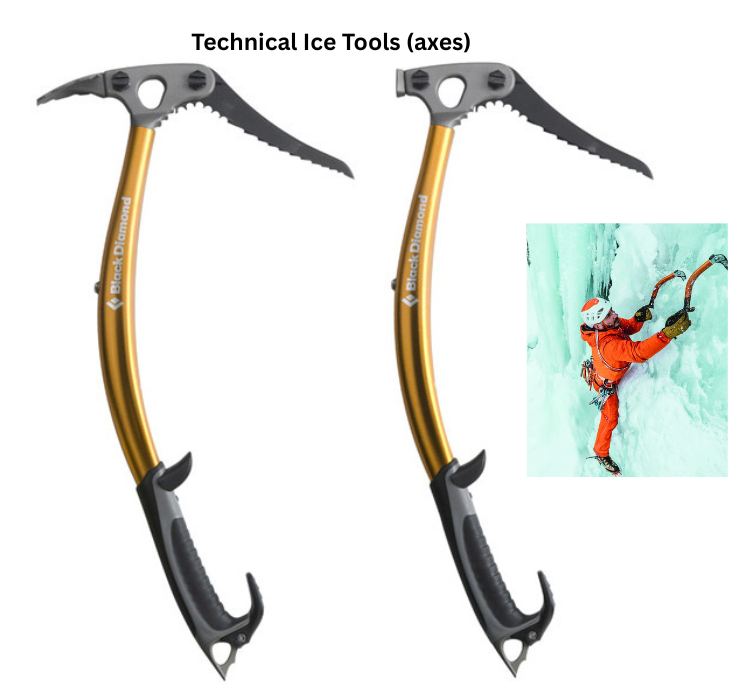
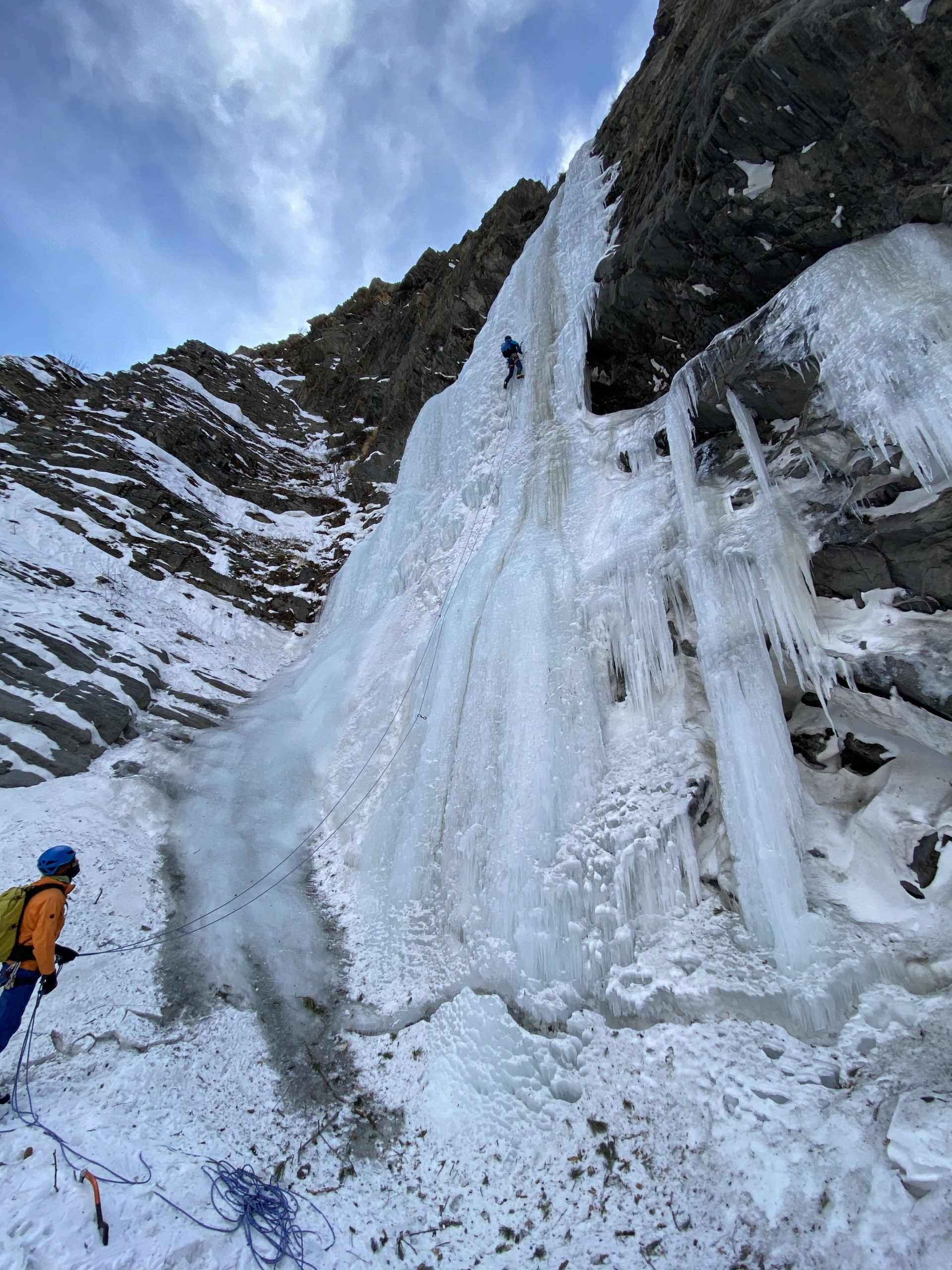
An ice axe is a key mountaineering tool used for balance, self-arrest, and climbing on snow and ice. It helps stop a fall, secure movement on steep slopes, and assist in step cutting when needed. For general mountaineering, a semi-technical ice axe is recommended, while a classic mountaineering axe is suitable for standard routes and training.
For more Technical terrain, Ice climbing tools are required. These are shorter and more curved, designed for steep and vertical ice, and used in pairs for better control and precision.

Carabiners

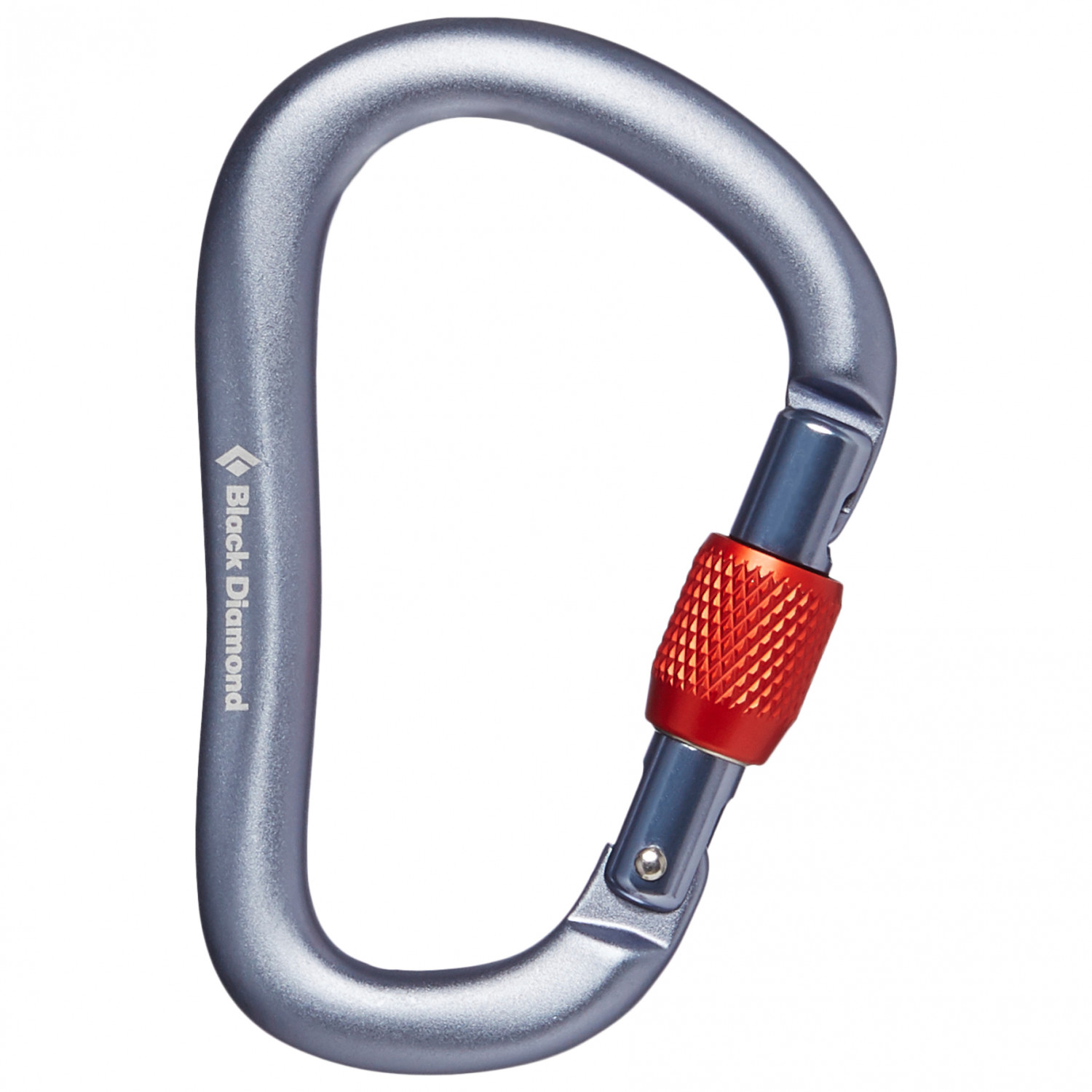
HMS Carabiner

A wide pear-shaped locking carabiner designed for belaying, rappelling, and tying a Munter hitch. Strong, secure, and essential for safe rope handling in climbing and mountaineering.

Required: 4 pcs

Jumar (Ascender)

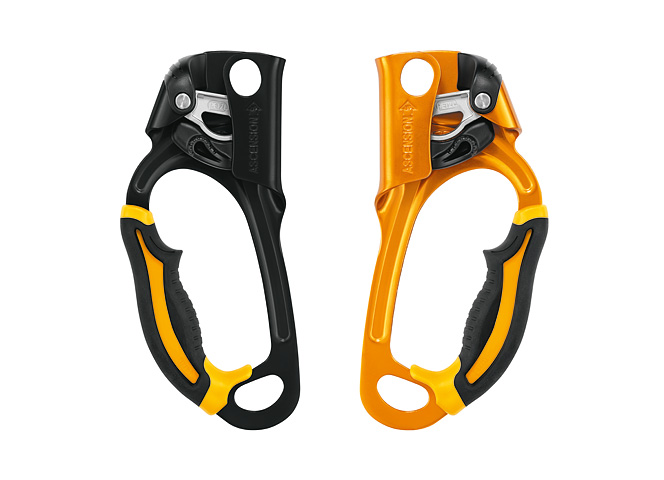
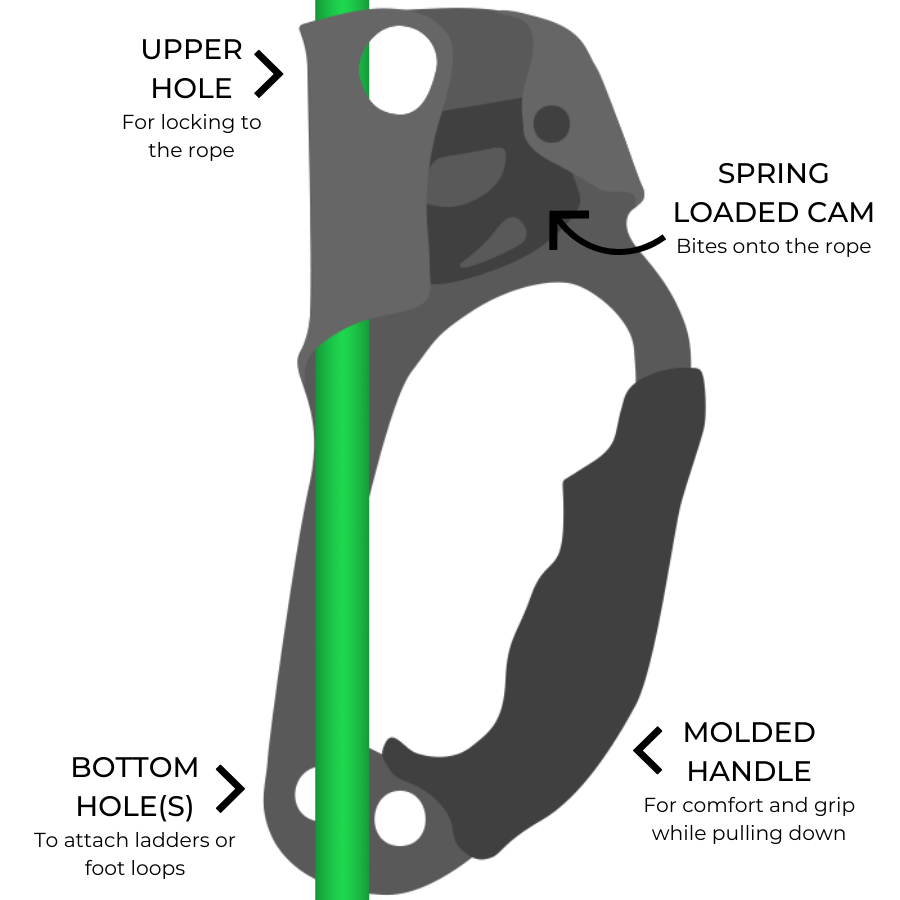
A jumar is a mechanical climbing device used to ascend a rope. It features a cam that grips the rope when weighted, allowing safe and efficient movement on fixed ropes and steep terrain.

Jumars are designed specifically for left-hand and right-hand use, and it is important to use the correct one in each hand for proper technique and safety. Typically, climbers use one in each hand for balance and efficient upward movement during mountaineering and rope work.

Belay Device

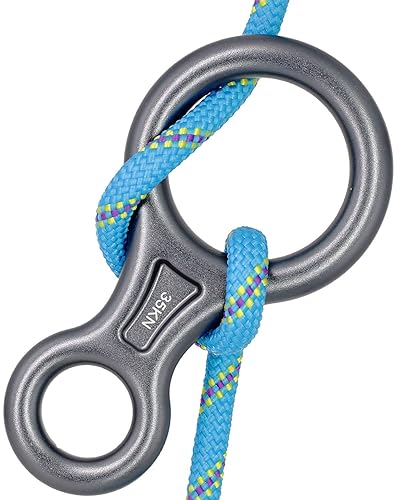
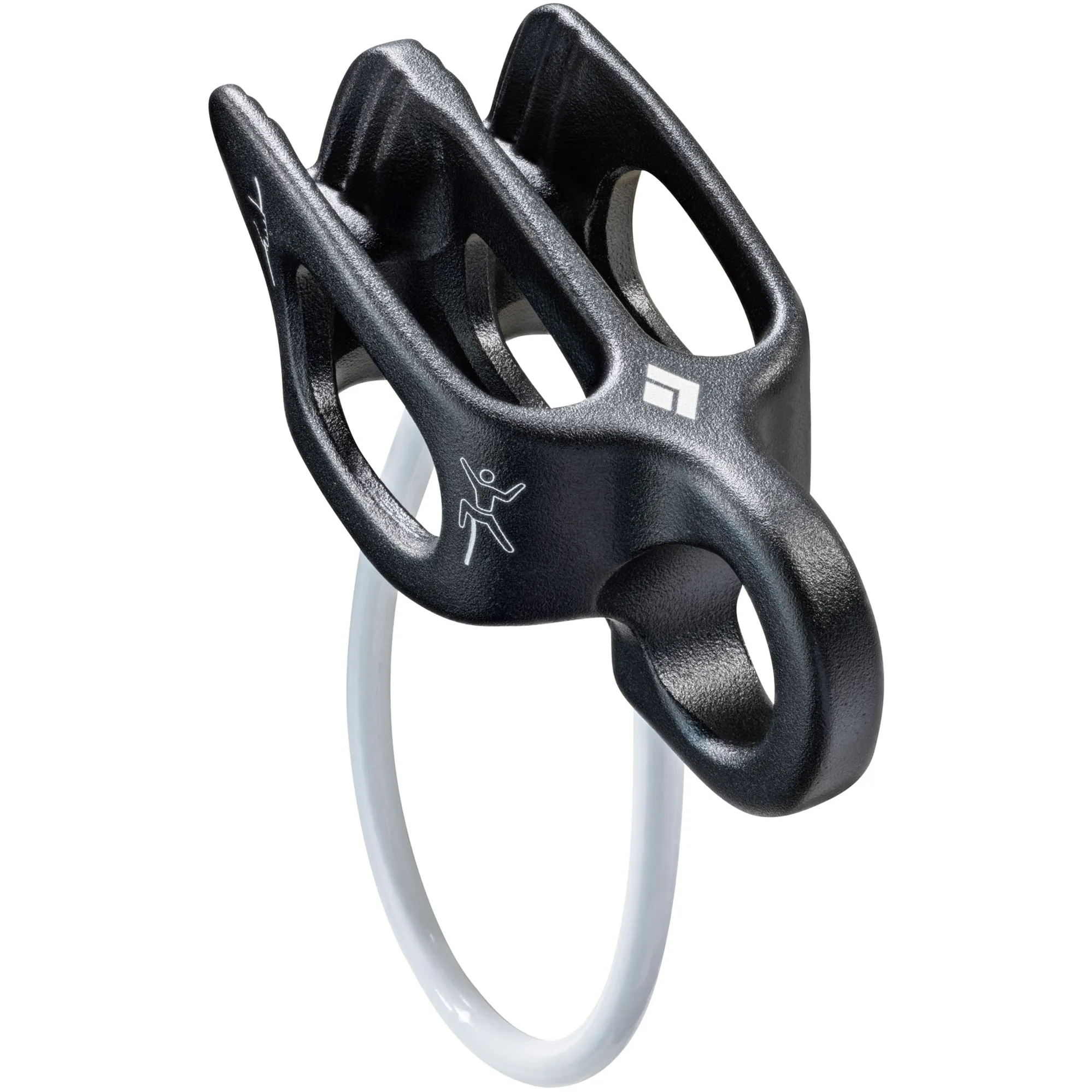
A compact metal device used to control the rope during belaying or rappelling. It provides friction to safely manage a climber’s fall, lower a partner, or descend in a controlled manner. Suitable for both single and double ropes depending on the device type.

You may choose a device that you are most comfortable using, such as an ATC Guide (with guide mode) or a Figure of Eight.

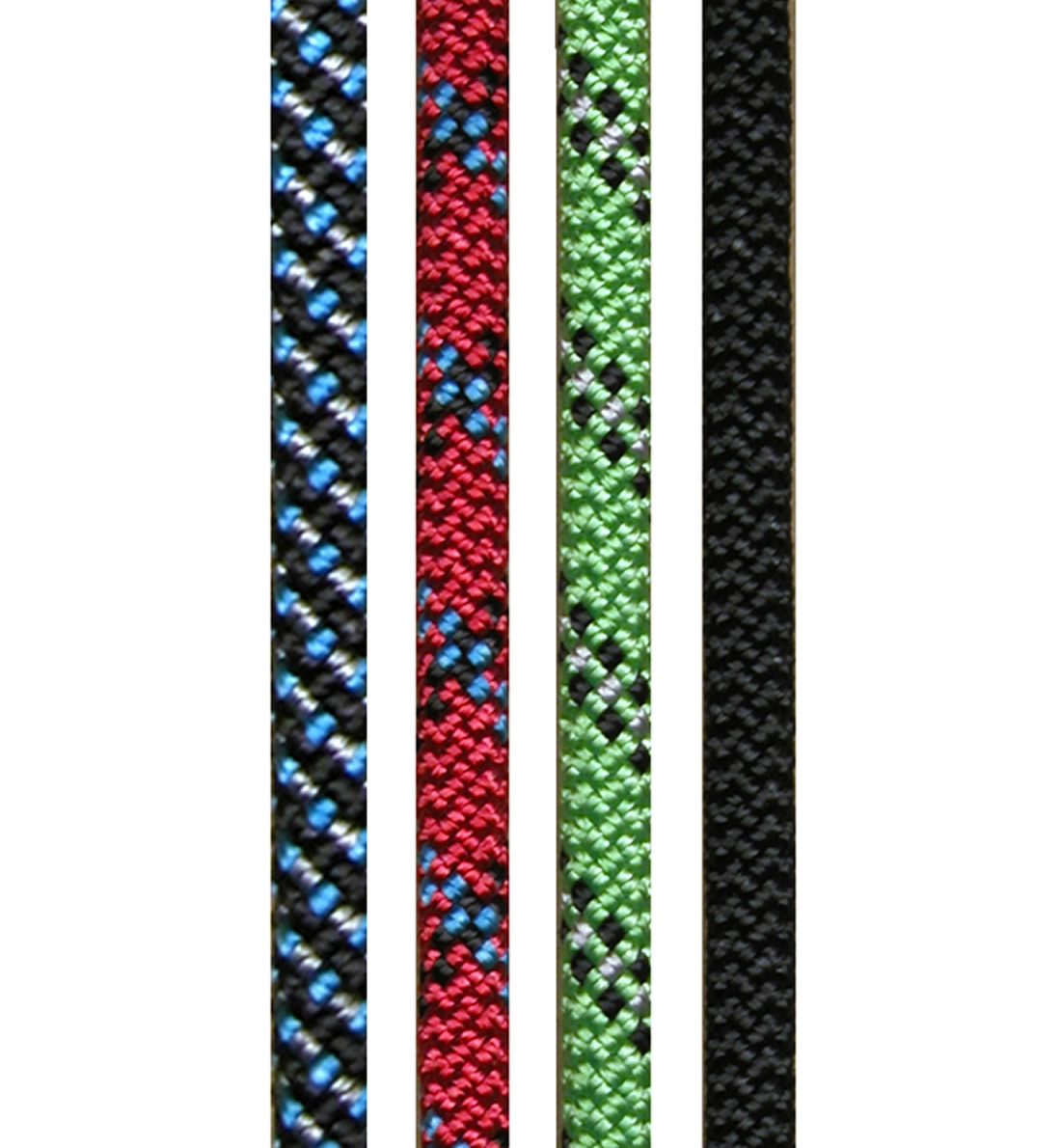
8MM Rope

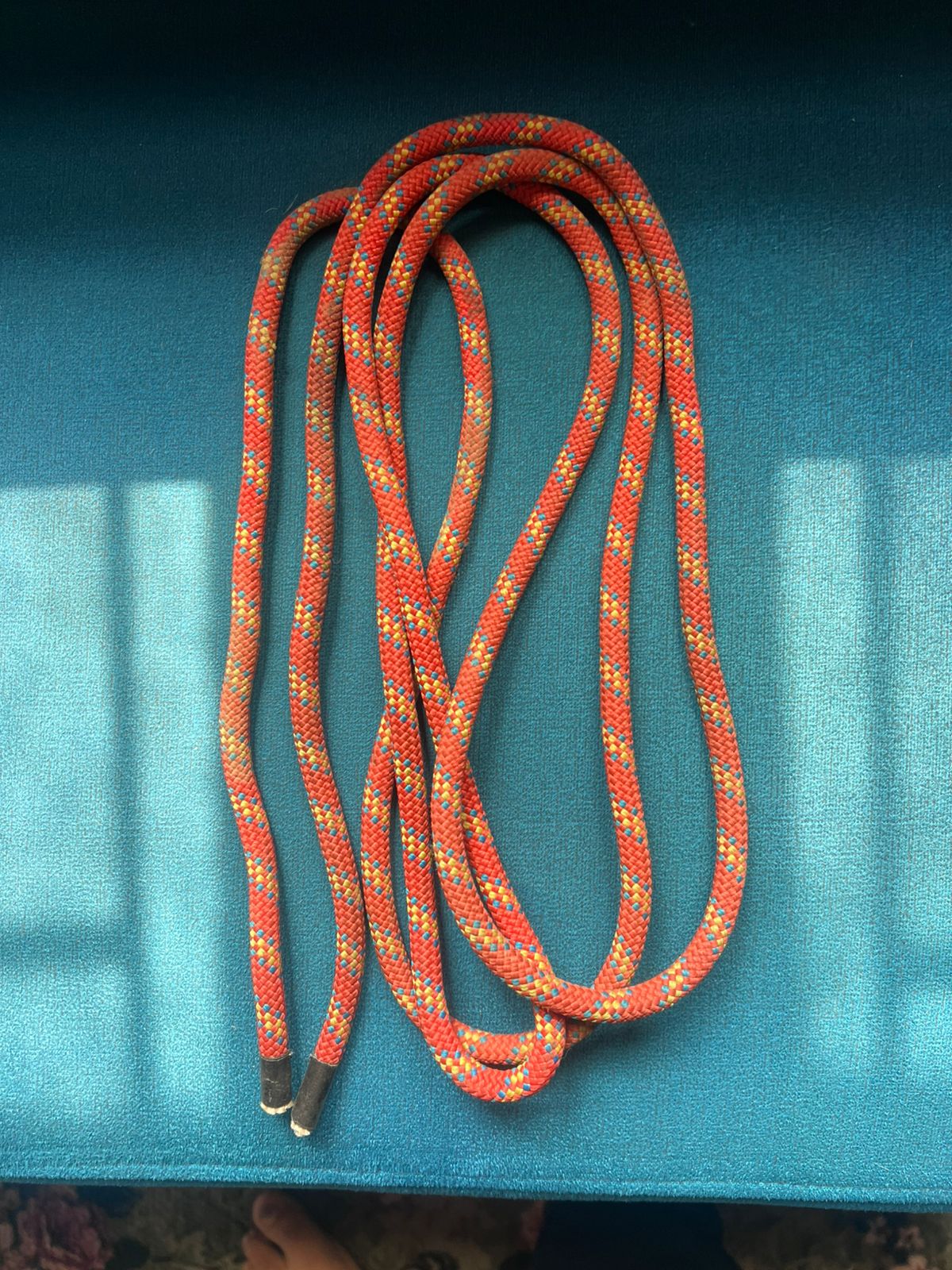
3 m long 8–9 mm dynamic rope for personal use, and a short rope for safety backup during jumaring and technical sections.

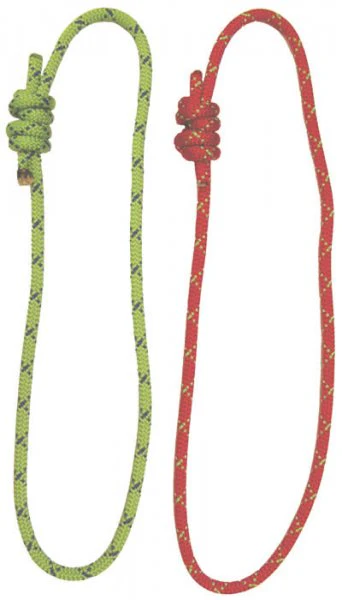
Prusik Rope 7mm

Prusik Rope – Small-diameter cord used for backup, ascending, self-rescue, or creating friction on a fixed rope. 5 meters around

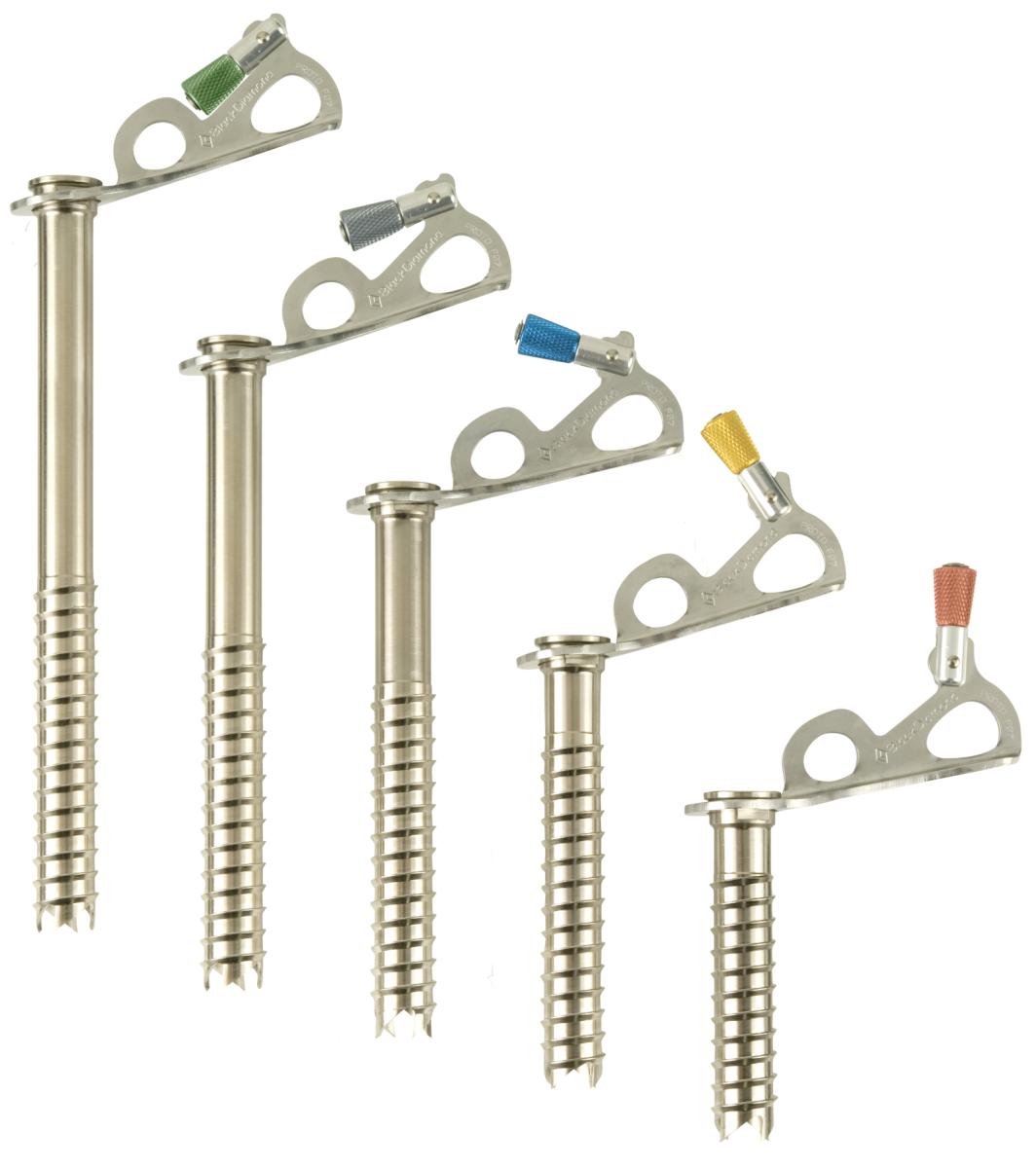
Ice Screw

A tubular screw used to create secure anchors in ice for protection or belaying during climbing.

Size: 20–22 cm
Required: 1–2 pcs
Recommended Brands: Black Diamond, Petzl

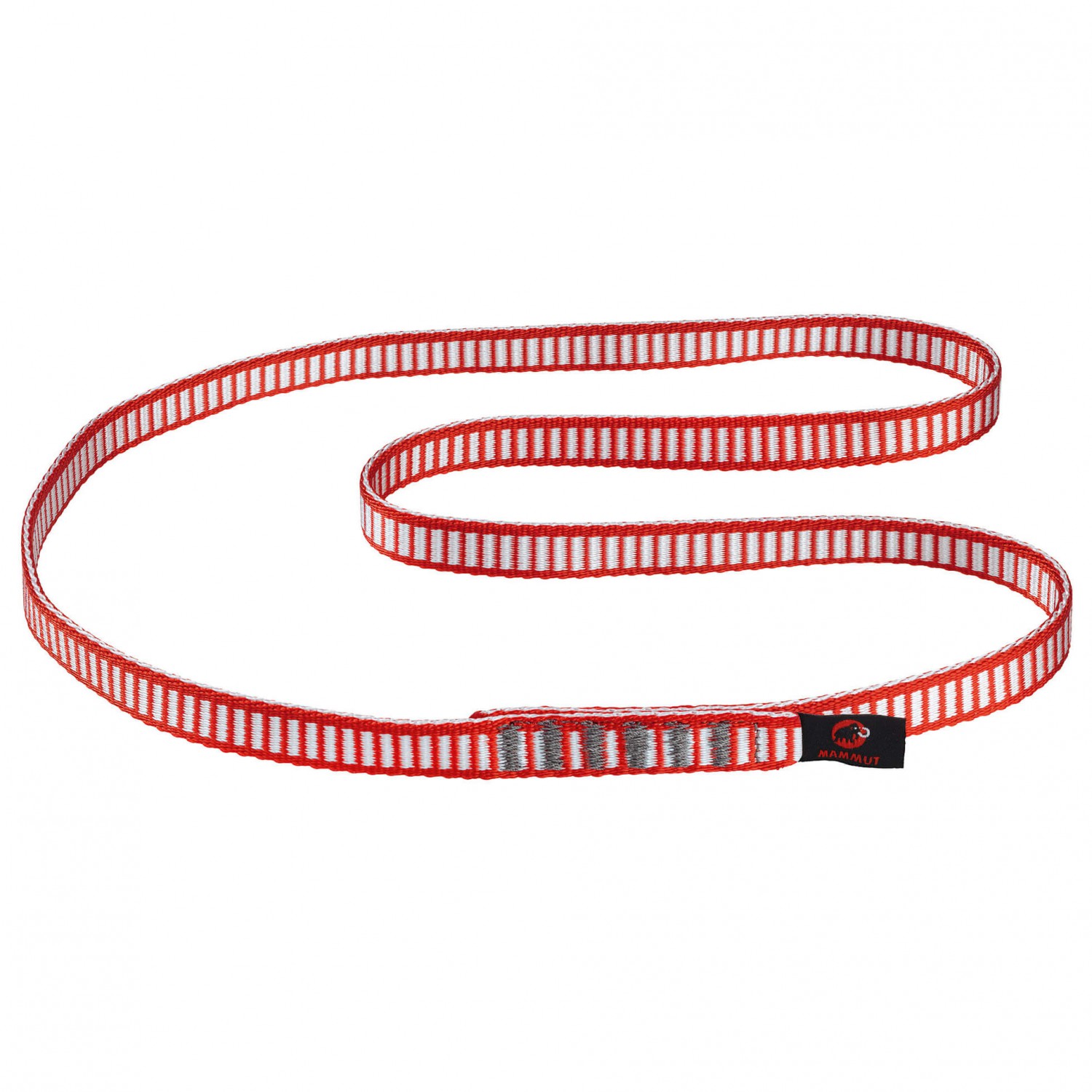
Tape Sling

Durable webbing used to create anchors, extend protection, or secure yourself on rock or ice.
Instead of sling now 9mm rope also can use for anchor. 120CM Sling for Anchor

Ratings & Reviews

0/5
-
Based on 0 reviews
Excellent
0
Very Good
0
Average
0
Poor
0
Terrible
0
How was your experience with us?
All Inclusive Price

18 Nights 19 Days

  • Instant Booking
  • No Hidden Costs
  • Secure Payments
  • 24/7 Support
Tulsi
 Talk to Expert (Tulsi )
+9779841239938
Kishan
 Talk to Expert (Kishan )
+9779846431447 (English | Français)
You May Also Like

Similar Packages

View All Packages
https://dev.softwareinfosys.com.np/hsc/ice-climbing-with-everest-training

Ice Climbing with Everest Training

Duration 15
Activity Mountaineering Course
Grade Moderate
$2450 $2250 Per Person
https://dev.softwareinfosys.com.np/hsc/gyalsten-peak

Gyalsten Peak

Duration 17 Nights 18 Days
Activity Peak Climbing
Grade Technical Challenging
https://dev.softwareinfosys.com.np/hsc/tshorolpa-trek-with-yalung-ri-climbing

TshoRolpa Trek with Yalung RI…

Duration 16 Nights 17 Days
Activity Trekking
Grade
https://dev.softwareinfosys.com.np/hsc/mt-lobuche-east-peak-climbing

Mt. Lobuche East Peak Climbing

Duration 18 Nights 19 Days
Activity Peak Climbing
Grade
newsletter

Receive Travel Inspirations

We're affiliated with
  • Nepal Government
  • NTB
  • TAAN
  • NMA
Professional Affiliations
  • Nepal National Mountain Guide
  • IFMGA